
Asia / Nepal
Annapurna
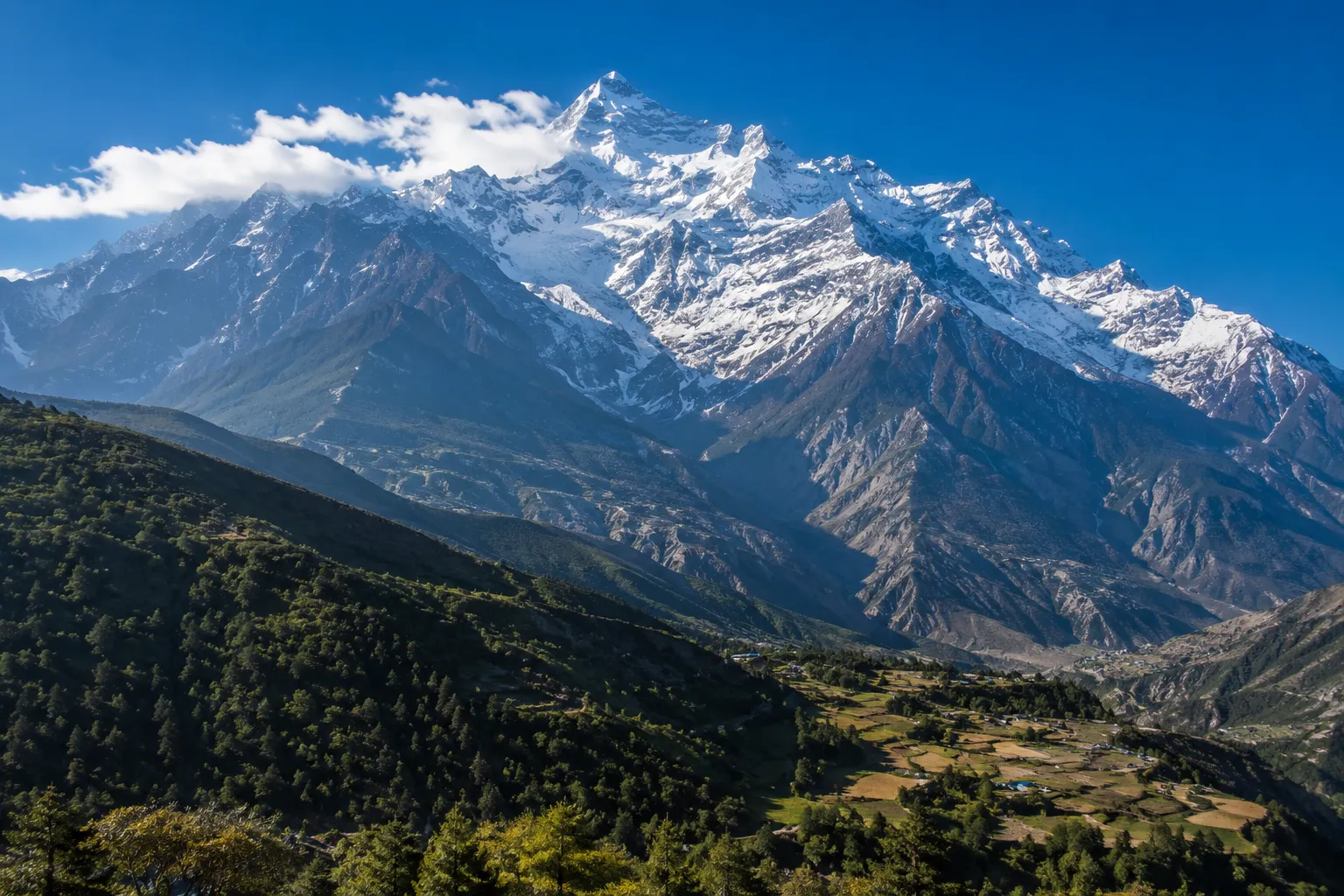
Village trails climb from rice terraces to glacier amphitheatres beneath some of the Himalaya's most overwhelming peaks.
Trip fit
Is Annapurna right for your trip?
Best for
Can I realistically visit this?
Yes, but choose the route carefully. Annapurna can mean anything from short foothill hikes to demanding multi-day treks with altitude, weather, permits, and changing trail conditions.
Physical difficulty
Moderate to strenuous
Planning complexity
Needs planning / better with local operator for longer treks
Best time to go
Best: Oct-Nov, Mar-Apr. Good: Dec, Feb, May. Rainy: Jun-Sep. Cold / limited higher routes: Jan.
Perfect for
- Hikers, mountain lovers, photography-focused travellers, and people who want villages, peaks, lodges, and trail culture
Not ideal if
- Travellers with no interest in walking, altitude preparation, or flexible mountain planning
Compare with similar places
Annapurna vs Fairy Meadows vs Carpathian Mountains - mountain journeys at very different levels of altitude, infrastructure, and commitment.
Location
Where this place is
Annapurna is in Nepal / Asia, useful for hiking, dramatic landscapes and photography before you choose routes, bases, and timing.
Nepal / Asia
Open location on Google Maps opens in a new tabRegional orientation only. Open Google Maps for exact location.
Travel essentials
Before you book the flight
Do you need a visa for Nepal?
Start with the country visa-policy overview, then confirm current rules with an official source before booking.
Check visa requirements before booking
Start with the visa-policy overview, then confirm the current rules with an official embassy, consulate, or government source before booking non-refundable travel.
If using a visa service, compare processing times, fees, refund rules, and whether they cover your nationality.
Optional visa service comparison opens in a new tab- 1 EUR ≈ 176.3 NPR
- 1 USD ≈ 154.2 NPR
- 1 GBP ≈ 207.3 NPR
Exchange Rates Updated Daily. Last updated on 19/Jul/2026.

No McDonald’s benchmark available.
Use local café / fast-food meal prices instead.
Approximate McDonald’s Big Mac® price where available. Prices vary by city, branch, tax, delivery channel, and date checked. This site is not affiliated with or endorsed by McDonald’s.
Source: Countries with McDonald's restaurants reference
No reliable McDonald's/Big Mac benchmark found; likely no official McDonald's presence
Prices Researched at May 2026
Where to stay
8+ rated stays for Annapurna
Booking.com opens with an 8+ guest-score filter for Annapurna, so you can compare current hotel photos, availability, prices, and recent traveler reviews before choosing a base.
8+ guest review score on Booking.com
A destination guide for the most accessible great-mountain trekking on the planet.
Why it is beautiful
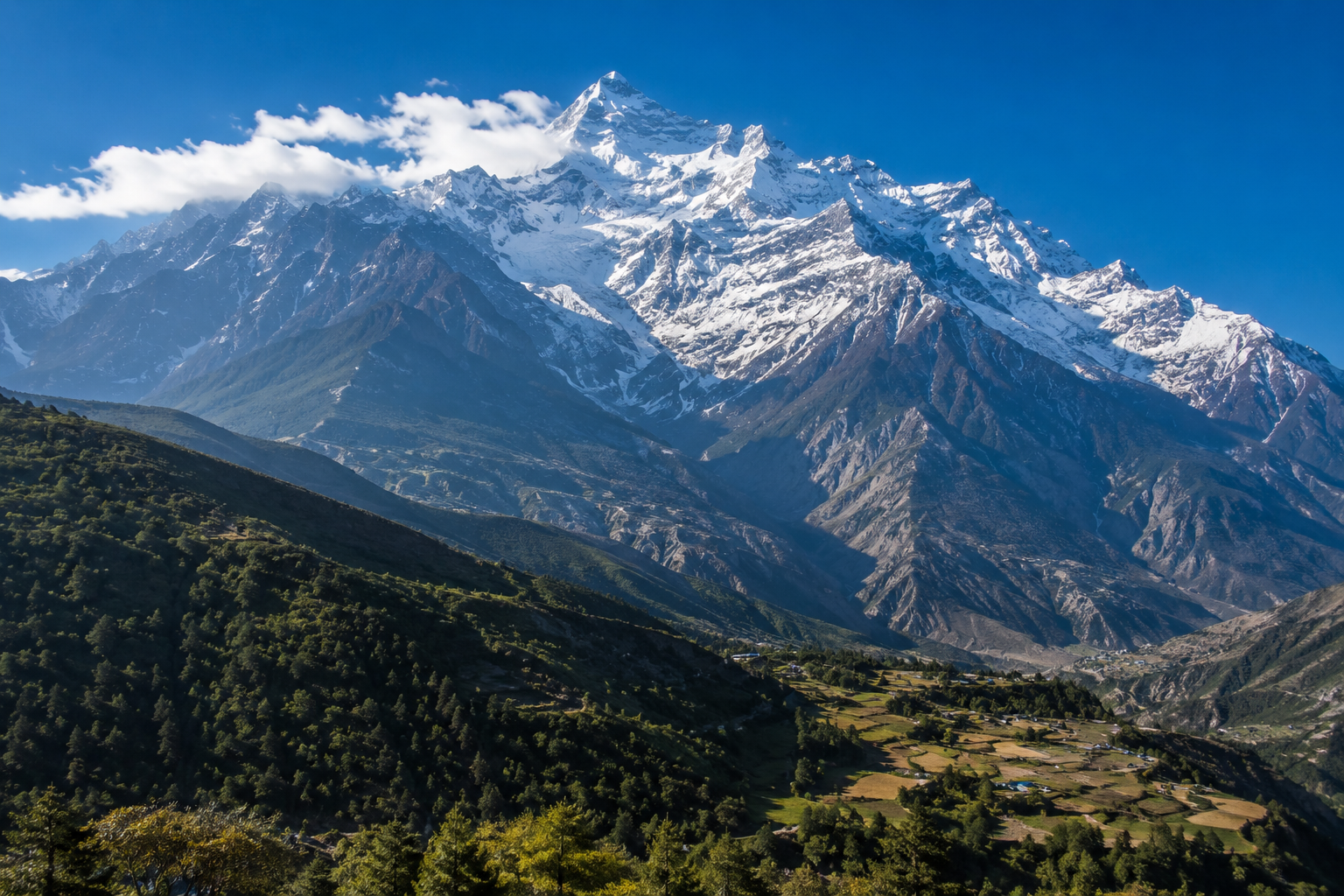
The Annapurna massif is a 55-kilometre wall of seven peaks above 7,000 m, three of them above 8,000 m. Trails fan out from Pokhara into a horseshoe of working Gurung, Magar, and Thakali villages, through rhododendron forest and terraced rice paddies, climbing eventually to glacier-rimmed amphitheatres at the base of the peaks. Compared to Everest, Annapurna treks are lower, greener, more cultural, and more accessible — without sacrificing the Himalayan scale.
10 practical tips to help you decide
These tips are designed to help you decide whether Annapurna fits your time, budget, comfort level, and travel style.
-
For hikers and mountain lovers who want Himalayan scale with good trail infrastructure. Annapurna suits anyone who wants to walk through working Himalayan villages and reach high-altitude viewpoints without the extreme commitment of Everest Base Camp. Skip it if multi-day walking holds no appeal, if altitude genuinely concerns you and you are unwilling to plan carefully, or if you cannot be flexible around mountain weather.
-
October–November is the prime window. March–April is the next best option. October and November bring the clearest skies and the most stable conditions — the trails are at their busiest, but with good reason. March and April offer blooming rhododendrons and sharp mornings, though afternoon haze is common. Avoid the monsoon (June to early September): leeches, slippery paths, and persistent cloud. December to February is cold and quiet, with the high Thorong La pass on the Circuit often closed by snow.
-
All treks start from Pokhara — fly or bus from Kathmandu. The standard gateway is Pokhara (30-minute flight or 7-hour bus from Kathmandu). Trailheads are 1–3 hours from Pokhara by local transport or jeep. Since April 2023, solo independent trekking in the Annapurna Conservation Area is officially no longer permitted — you must trek with a licensed guide. Porter-guides are available in Pokhara from around USD 25–35 per day and make practical sense for first-timers.
-
Match the route to your time and fitness before booking. Poon Hill (4–5 days, 3,210 m) is the accessible option: suitable for families and those new to Himalayan walking. Mardi Himal (5–6 days, 4,500 m) is a quieter ridge route with outstanding views. Annapurna Base Camp (7–11 days, 4,130 m) is the classic full-experience choice. The Annapurna Circuit (12–18 days, 5,416 m Thorong La) is the full commitment. Choosing the wrong route for your fitness or time budget is the most common Annapurna mistake.
-
Use Pokhara as your trekking base, not just a transit stop. Pokhara is the staging point for all Annapurna routes — permits, guides, gear hire, and final packing all happen here. It is also a soft landing after the trek: lakeside cafes, paragliding, and a relaxed pace. Budget two nights in Pokhara before and one night after. Kathmandu’s Thamel district is the place for gear if you need it before travelling to Pokhara.
-
Budget USD 25–35 per day on trail, or USD 1,000–1,500 for a guided package. Self-organised trekking costs roughly USD 25–35 per day in teahouse food and lodging, plus a guide fee. Organised ABC packages (guide, porter, permits, teahouse meals) typically run USD 1,000–1,500 for a 10–12 day programme. ATMs only work reliably in Pokhara and Kathmandu — bring Nepalese rupees for the entire trail before you leave town. Tip your guide and porter 10–15% at the end.
-
Two permits are required — and you must carry them at every checkpoint. All Annapurna trekkers need the ACAP (Annapurna Conservation Area Permit, NPR 3,000) and the TIMS card (NPR 2,000). Both are checked at multiple gates on the trail. Arrange them in Pokhara or Kathmandu before setting out. Your travel insurance must cover helicopter evacuation to at least 6,000 m — non-negotiable in the mountains.
-
Altitude sickness is the main risk on ABC and the Circuit. Take it seriously. AMS (Acute Mountain Sickness) can affect anyone above 3,000 m regardless of fitness. On the ABC route the maximum altitude is 4,130 m; on the Circuit the Thorong La pass reaches 5,416 m. The rule is simple: climb no more than 500 m of sleeping altitude per day above 3,000 m, build a rest day at Deurali (ABC) or Manang (Circuit), and descend immediately if symptoms worsen. Diamox (acetazolamide) is cheap in Kathmandu pharmacies and works as a prophylactic.
-
Don’t underestimate Poon Hill. Poon Hill (3,210 m) is widely dismissed as the “easy” Annapurna option, but the sunrise view over Dhaulagiri and Annapurna from the summit is genuinely extraordinary. For first-time Himalayan visitors, families, or anyone on a shorter trip, Poon Hill is often the right choice — better to do it properly than to rush the ABC and miss the point of being in the mountains.
-
A helicopter flight over the massif is a viable alternative to a full trek. For visitors who cannot commit to a multi-day trek, a scenic helicopter flight (around one hour) from Pokhara over Annapurna and Machhapuchhare delivers the scale and photography in a fraction of the time. Buddha Air and private charter operators run these regularly. It is expensive (roughly USD 200–400 per person) but reframes the whole visit as a panoramic overflight rather than a compromise.
Pick a trek
Annapurna Base Camp (ABC) — 7–11 days: The classic. From Nayapul or Ghandruk up to 4,130 m at Base Camp, ringed by Annapurna I, South, Hiunchuli and Machhapuchhare. Best variety: jungle to glacier in a week.
Annapurna Circuit — 12–18 days: A full loop over the 5,416 m Thorong La pass. New roads have shortened the trail; most trekkers now start at Chame or Manang. Quieter and wilder if you walk it independently.
Mardi Himal — 5–6 days: A short, scenic ridge trek topping out at 4,500 m with full-frontal Machhapuchhare views. Good first Himalayan trek.
Poon Hill — 4–5 days: The easy option. Sunrise at 3,210 m over Dhaulagiri and Annapurna; perfect for families and shoulder-season travellers.
When to go
October–November: clearest skies and stable weather. Trails are busy.
March–April: rhododendrons in bloom; afternoon haze is common but mornings are sharp.
December–February: very cold, fewer crowds, Thorong La often closed by snow.
Monsoon (June–early September): leeches, slips, cloud. Avoid for ABC; the Mustang rain-shadow region works.
Permits and paperwork (current to 2026)
Two permits are required for Annapurna trekking and are checked at multiple gates:
ACAP (Annapurna Conservation Area Permit) — NPR 3,000 for foreigners, half-price for SAARC.
TIMS (Trekkers’ Information Management System) card — NPR 2,000.
From April 2023 Nepal began enforcing the rule that all trekkers in National Parks and Conservation Areas hire a licensed guide. Independent solo trekking is no longer officially allowed in Annapurna, though porter-guides for around USD 25–35 per day are widely available in Pokhara and Kathmandu.
Costs
From the archive, traveller experience is consistent: organised treks run roughly USD 1,000–1,500 for a 10–12 day ABC programme inclusive of guide, porter, permits and teahouse meals. Self-organised, expect USD 25–35/day in food and lodging plus the guide fee. Tipping at the end — around 10–15% split between guide and porter — is standard.
Operators trusted by travellers in the archive
Ace the Himalaya — widely recommended for ABC and EBC, fair prices, food included on most packages.
Nepal Eco Adventures (Chhatra Karki) — small outfit, very well priced.
Local Pokhara porter-guide hire — perfectly safe, you save several hundred dollars, and meals at teahouses are budgeted separately at around USD 350 for 12 days.
Altitude and acclimatisation
AMS (Acute Mountain Sickness) is the single biggest risk. One traveller in the archive describes the onset:
“I was hiking normally and suddenly fell onto my friend, felt really tired and just wanted to lay down and sleep. I couldn’t really talk or walk straight — strangely it felt like being drunk but without alcohol.”
Climb no more than ~500 m of sleeping altitude per day above 3,000 m.
Build a rest day at Manang (Circuit) or Deurali/MBC (ABC) before going higher.
Drink 3–4 litres a day, avoid alcohol, eat carbs aggressively.
Diamox (acetazolamide) is cheap in Kathmandu pharmacies and works as a prophylactic at 125 mg twice daily.
Once you’re off the trail
Pokhara is a soft landing: lakeside cafes, paragliding, a good massage scene and warm air.
A scenic helicopter flight (Buddha Air or private charter) over the massif is a popular post-trek treat — about an hour over Annapurna and Machhapuchhare.
Heading north: Mustang and Manang are the dry, Tibetan-flavoured trans-Himalayan rain-shadow districts — Lo Manthang requires a USD 500/10-day restricted-area permit.
Practical tips
Cash: ATMs in Pokhara and Kathmandu only. Bring NPR cash for the trail.
SIM: Ncell or Nepal Telecom prepaid SIMs at Kathmandu airport — good 4G up to about 3,500 m on the ABC trail.
Insurance: must cover helicopter evacuation to at least 6,000 m. World Nomads, IMG Global, Global Rescue all do.
Gear: Kathmandu’s Thamel district sells real and replica down and rentals at half the cost of buying new.