
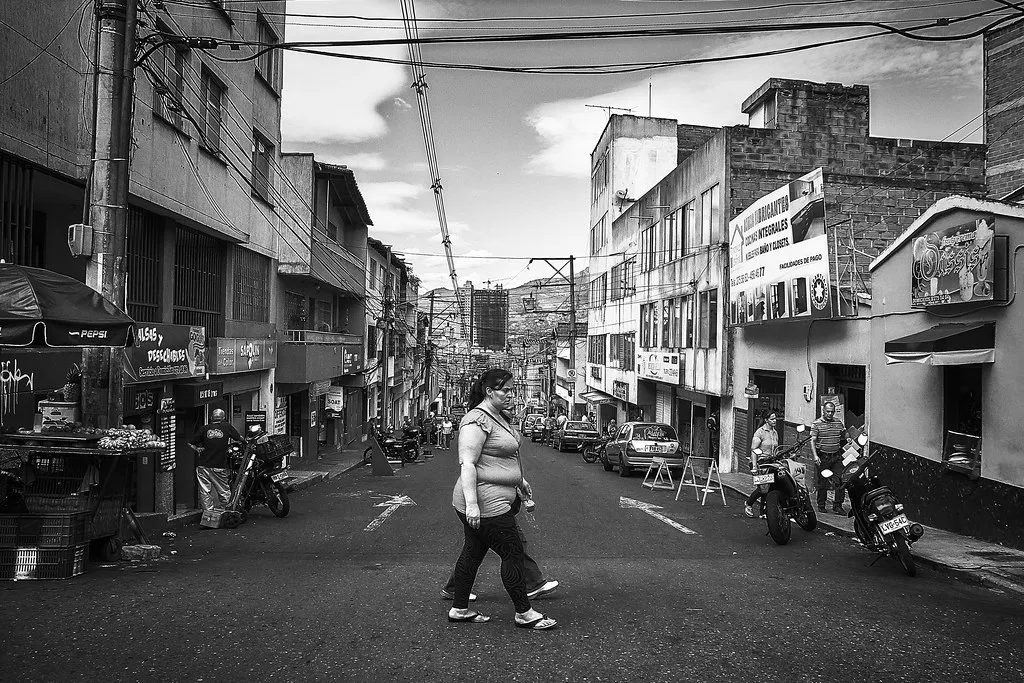
South America / Colombia
Medellín
A mountain-ringed city of cable cars, spring weather, public art, and restless reinvention high in Colombia's Aburra Valley.
Trip fit
Is Medellín right for your trip?
Best for
Can I realistically visit this?
Yes. Medellín is a major city with good tourism infrastructure, but choose neighbourhoods carefully, plan safe transport, and combine city views with nearby towns and mountains.
Physical difficulty
Easy to moderate because of hills and heat
Planning complexity
Easy independent trip / needs urban awareness
Best time to go
Best: Dec-Mar, Jul-Aug. Good: Apr-Jun, Sep-Nov. Rainy periods vary; check before booking.
Perfect for
- City-view photographers, food travellers, digital nomads, culture travellers, and people combining urban energy with mountain landscapes
Not ideal if
- Travellers who want wilderness, low stimulation, or to ignore city safety basics
Compare with similar places
Medellín vs Cape Town/Table Mountain vs Budapest - city beauty shaped by topography, light, and viewpoints.
Location
Where this place is
Medellín is in Colombia / South America, useful for culture and architecture, photography and easy luxury trips before you choose routes, bases, and timing.
Colombia / South America
Open location on Google Maps opens in a new tabRegional orientation only. Open Google Maps for exact location.
Travel essentials
Before you book the flight
Do you need a visa for Colombia?
Start with the country visa-policy overview, then confirm current rules with an official source before booking.
Check visa requirements before booking
Start with the visa-policy overview, then confirm the current rules with an official embassy, consulate, or government source before booking non-refundable travel.
If using a visa service, compare processing times, fees, refund rules, and whether they cover your nationality.
Optional visa service comparison opens in a new tab- 1 EUR ≈ 3688 COP
- 1 USD ≈ 3225 COP
- 1 GBP ≈ 4336 COP
Exchange Rates Updated Daily. Last updated on 19/Jul/2026.

Big Mac® benchmark: approx. 22900 COP
Checked: January 2026. Prices vary by city and branch.
Approximate McDonald’s Big Mac® price where available. Prices vary by city, branch, tax, delivery channel, and date checked. This site is not affiliated with or endorsed by McDonald’s.
Source: The Economist Big Mac Index country-level data
Country-level Big Mac price from The Economist Big Mac Index
Prices Researched at May 2026
Where to stay
8+ rated stays for Medellín
Booking.com opens with an 8+ guest-score filter for Medellín, so you can compare current hotel photos, availability, prices, and recent traveler reviews before choosing a base.
8+ guest review score on Booking.com

Why it is beautiful
Medellín sits at 1,495 metres in the Aburrá Valley, a narrow canyon in Colombia’s central Andes, its neighbourhoods stacked in tiers up the valley walls and connected by a metro system that extends into the barrios above by cable car. The city experiences spring-like weather year-round — the “City of Eternal Spring” label is earned — with warm days, cool evenings, and a green landscape that makes it feel less like a city than a mountain settlement that grew to fill its valley. Pablo Escobar’s Medellín and the transformed city of today coexist in the same streets, and the tension between that history and the urban renewal visible in the library parks, cable gondolas, and public sculpture of the intervening decades gives Medellín an energy that few South American cities match.
10 practical tips to help you decide
These tips are designed to help you decide whether Medellín fits your time, budget, comfort level, and travel style.
-
For city-view photographers, food travellers, digital nomads, and people who want urban energy with mountain landscapes — not those wanting wilderness or low stimulation. Medellín rewards visitors who engage with the city: the metro cable cars, the street food in Laureles, the public libraries in the hillside comunas, and the flower festival if you time it right. Skip it if you want remote nature or find large Latin American cities overwhelming — Medellín has real energy and requires basic urban awareness to enjoy safely.
-
December to March and July to August for the driest, brightest conditions. Medellín has two dry seasons: December to March and July to August. These give the clearest valley views and the best conditions for outdoor walking and photography. April–May and October–November are the rainiest months — afternoon downpours, grey skies, and cooler temperatures. The Feria de las Flores (Flower Festival) is in early August — a spectacular week of parades, silleteros carrying flower arrangements, and city-wide celebration worth timing a trip around.
-
Fly into Medellín Enrique Olaya Herrera (EOH) from within Colombia or José María Córdova (MDE) from international points. José María Córdova airport (MDE) handles international flights, 45 km east of the city in Rionegro — the transfer takes about 45 minutes by taxi or transfer bus. Enrique Olaya Herrera (EOH) is in the city itself and handles domestic routes from Bogotá, Cartagena, and other Colombian cities. Colombia gives 90-day visa-free entry to most Western nationals; check the UK FCDO Colombia travel advice for current entry requirements and safety notes.
-
Four to five days to cover the city properly; extend for day trips into the Andes. Three days gives El Poblado, a cable car ride, and Botero Plaza. Four days adds a guided visit to Comuna 13, the botanical garden, and Parque Explora. A fifth day allows a day trip to Guatapé (El Peñón rock, 2.5 hours each way) or the artisan town of Jericó. A full week suits digital nomads or people wanting to explore the city at pace.
-
Stay in El Poblado or Laureles — these are the safest and most visitor-friendly neighbourhoods. El Poblado is the most tourist-oriented area, with hotels, restaurants, and cafés concentrated around Parque Lleras. Laureles is quieter and more local-feeling, popular with long-stay travellers and coffee shops. Both are well-connected to the metro. Avoid staying in unfamiliar areas without local advice — Medellín is transformed but not uniformly safe, and neighbourhood character varies sharply.
-
Medellín is excellent value — one of Latin America’s most affordable major cities. Mid-range hotels in El Poblado run USD 40–90 per night; boutique guesthouses run less. Meals at local restaurants are USD 5–10; upscale restaurant meals USD 15–30. Coffee is exceptional and cheap everywhere. Uber operates in Medellín (use it over hailing street taxis). Budget roughly USD 60–100 per person per day including accommodation, food, transport, and guided tours.
-
Read the FCDO advisory carefully — Colombia has elevated risks outside tourist areas. The UK FCDO Colombia travel advice advises against travel to specific border regions and flags crime, express kidnapping, and spiked drinks as risks in Medellín’s nightlife areas. The FCDO describes El Poblado and central tourist areas as broadly manageable with standard precautions: don’t flash valuables, use Uber or trusted taxis, avoid displaying phones on the street, and be cautious in bars. The US State Dept rates Colombia Level 3: Reconsider Travel — read the full advisory before booking.
-
Use the Metrocable and Metroplus to understand the city’s topography — they are the best experience Medellín offers. The metro system covers the valley floor; cable cars (Lines J, K, L, M) ascend to the upper comunas and Parque Arvi at the ridge. A single integrated fare on the Civica card covers metro, cable car, and bus connections. Line L reaches Parque Arvi, a forested ridge park above the city with trails and market stalls — a full half-day excursion from downtown. The ride up alone, watching the city spread below, is worth the trip.
-
Visit Comuna 13 with a local guide rather than independently. Comuna 13 was one of Medellín’s most violent areas in the early 2000s and is now known for its open-air street art, outdoor escalators (the first in Latin America’s public transport system), and community-run tourism. The transformation is real, but the narrative benefits from local context — a guide from the community frames the murals and history better than arriving cold. Book through local tour operators rather than international platforms for money to stay in the neighbourhood.
-
Guatapé is the most rewarding day trip — three hours from the city and worth the early start. El Peñón de Guatapé is a 200-metre granite monolith rising from a reservoir 2.5 hours from Medellín. The 740-step climb to the summit gives one of Colombia’s most dramatic panoramas: green hills, island-dotted water, and the surrounding Andean landscape. The town of Guatapé itself has brightly painted zócalos (building friezes) and a waterfront worth an hour’s walk. Leave by 7am to beat the crowds to the summit.