
Middle East / Isfahan, Iran
Naqsh-e Jahan Square
Isfahan's great square gathers turquoise domes, arcades, mosques, and palace facades into one of the world's grandest urban rooms.
Trip fit
Is Naqsh-e Jahan Square right for your trip?
Best for
Can I realistically visit this?
Yes, if current travel conditions and entry requirements allow. Isfahan is a major city with deep cultural infrastructure, but visitors must check up-to-date travel advice before planning.
Physical difficulty
Easy
Planning complexity
Needs some planning
Best time to go
Best: Apr-May, Sep-Oct. Good: Mar, Nov. Very hot: Jun-Aug. Cold / possible: Dec-Feb.
Perfect for
- Architecture lovers, photographers, history travellers, and visitors drawn to grand squares, mosques, bazaars, and Persian design
Not ideal if
- Travellers unwilling to check current entry rules, local restrictions, and travel advice carefully
Compare with similar places
Naqsh-e Jahan Square vs Registan vs Sultan Ahmed Mosque - monumental Islamic urban space and tilework.
Location
Where this place is
Naqsh-e Jahan Square is in Isfahan, Iran / Middle East, useful for culture and architecture, photography and remote/adventurous travel before you choose routes, bases, and timing.
Isfahan, Iran / Middle East
Open location on Google Maps opens in a new tabRegional orientation only. Open Google Maps for exact location.
Travel essentials
Before you book the flight
Do you need a visa for Iran?
Start with the country visa-policy overview, then confirm current rules with an official source before booking.
Check visa requirements before booking
Start with the visa-policy overview, then confirm the current rules with an official embassy, consulate, or government source before booking non-refundable travel.
If using a visa service, compare processing times, fees, refund rules, and whether they cover your nationality.
Optional visa service comparison opens in a new tab- 1 EUR ≈ 1,532,218 IRR
- 1 USD ≈ 1,339,925 IRR
- 1 GBP ≈ 1,801,459 IRR
Exchange Rates Updated Daily. Last updated on 19/Jul/2026.
No McDonald’s benchmark available.
Use local café / fast-food meal prices instead.
Approximate McDonald’s Big Mac® price where available. Prices vary by city, branch, tax, delivery channel, and date checked. This site is not affiliated with or endorsed by McDonald’s.
Source: Countries with McDonald's restaurants reference
No reliable McDonald's/Big Mac benchmark found; likely no official McDonald's presence
Prices Researched at May 2026
Where to stay
8+ rated stays for Naqsh-e Jahan Square
Booking.com opens with an 8+ guest-score filter for Naqsh-e Jahan Square, so you can compare current hotel photos, availability, prices, and recent traveler reviews before choosing a base.
8+ guest review score on Booking.com

Why it is beautiful
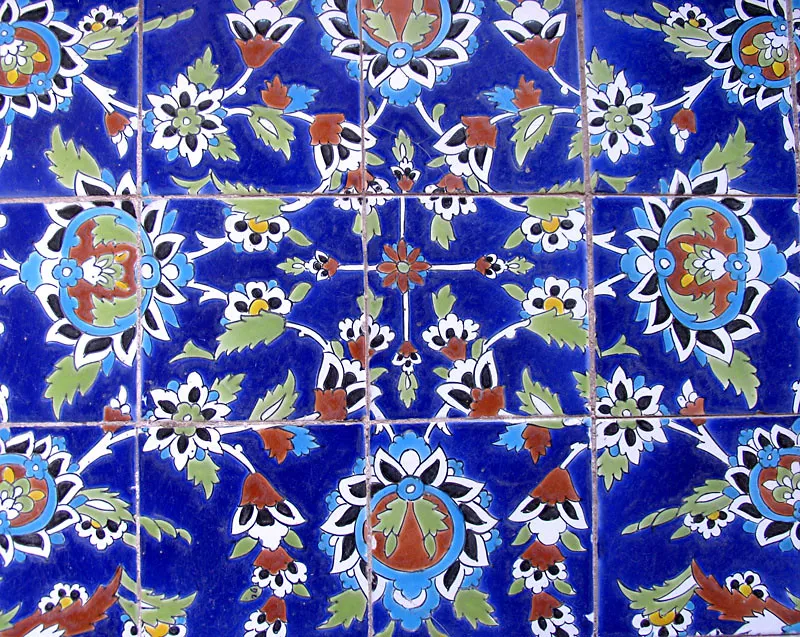
Naqsh-e Jahan Square — “Image of the World” in Persian — was laid out by Shah Abbas I in the early 17th century as the centrepiece of his new capital, and at 512 by 163 metres it remains one of the largest public squares ever built. The Sheikh Lotfollah Mosque on the east side has no minarets and no courtyard — it was built as Shah Abbas’s private royal chapel, its dome covered in cream and buff tiles that glow amber at dusk — while the Imam Mosque on the south closes the axis with a facade of cobalt, turquoise, and gold tilework that took 18 years to complete. The Ali Qapu Palace on the west is six storeys of carved plasterwork stucco, its music room ceiling cut with negative vase shapes to improve resonance. Walk the arcades at evening when Isfahan’s families fill the square, and the whole composition — domes, arcades, garden, and chai houses — becomes clear in a way no photograph prepares you for.
10 practical tips to help you decide
These tips are designed to help you decide whether Naqsh-e Jahan Square fits your time, budget, comfort level, and travel style.
-
For architecture lovers, Islamic art travellers, and photographers drawn to monumental tile work and historic urban design — not those unwilling to navigate Iran’s entry requirements. Naqsh-e Jahan Square is one of the world’s ten or fifteen genuinely unmissable built spaces. Isfahan is safe by the standards of the region and welcoming to foreign visitors, but entry requires advance planning around visas, banking restrictions, and current travel advisories. Read all of these before committing.
-
April to May and September to October for the best light and temperatures. Isfahan sits at 1,590 metres in a high-altitude basin, which moderates heat but makes winters cold. April and May give warm days (20–28°C), excellent photography light, and spring flowers in the surrounding parkland. September and October give similar conditions with slightly lower crowds. June to August push above 35°C and the tile colours bleach in the midday glare. December to February can be cold (near freezing at night) but quiet, with low-angle winter light on the Imam Mosque dome.
-
Fly into Isfahan (IFN) or Tehran (IKA/THR) and connect by bus or internal flight. Isfahan’s airport receives domestic flights from Tehran, Mashhad, and Shiraz. Tehran’s Imam Khomeini International Airport (IKA) handles international routes and connects to Isfahan by bus (4.5 hours) or domestic flight (1 hour). Visa requirements for Iran are complex: most Western nationals need a visa issued in advance, which typically requires a reference code from an Iranian tour operator or sponsor. US, UK, and Canadian passport holders face additional restrictions — check the UK FCDO Iran travel advice for the current position.
-
Three days for Isfahan; extend to five or six to include Shiraz and Persepolis. Two full days covers Naqsh-e Jahan thoroughly (square, both mosques, Ali Qapu, bazaar), plus the Khaju Bridge and Jameh Mosque in the old city. A third day reaches the Armenian Vank Cathedral and Manar Jonban (the shaking minarets). Five days adds Shiraz by bus or flight: the Nasir al-Mulk Mosque (the famous pink mosque), the Vakil Bazaar, and a day at Persepolis. This Isfahan–Shiraz route is the classic Iran cultural circuit.
-
Stay near or inside the bazaar district for the most atmospheric Isfahan experience. Traditional Iranian caravanserai hotels (historic courtyard properties) cluster around the bazaar and square. They range from mid-range to upscale and provide the most immersive setting — waking to the sound of the bazaar and walking to the square in 5 minutes. Booking platforms may not work reliably for Iran properties — contact hotels directly by email and confirm payment methods before arrival.
-
Iran is very affordable by international standards — but banking access is a serious practical obstacle. Accommodation at a mid-range traditional hotel runs USD 40–80 per night (paid in cash). Meals at local restaurants run the equivalent of USD 3–8. Entry fees to major sites are low. The critical issue: most international cards do not work in Iran due to banking sanctions. You must bring enough cash — euros or US dollars preferred — to cover your entire trip, and exchange at approved exchange offices (not banks). Plan carefully for this.
-
Check the travel advisory and visa status before any booking — both are subject to rapid change. The UK FCDO advises against all travel to Iran as of mid-2025, citing arbitrary detention risk for dual nationals and foreign citizens, and the complex political environment. UK nationals and dual national holders face particular risk. The US State Dept rates Iran Level 4: Do Not Travel. For nationals of other countries, individual risk assessments vary — check your own government’s current advisory carefully before making any commitment.
-
Dress conservatively throughout — this is a legal requirement, not just local custom. Iranian law requires women to cover their hair (headscarf), wear long sleeves, and cover their legs in all public spaces, including mosques and the square. Men should wear long trousers. Dress requirements inside mosques are stricter — women may be offered cloaks at the door. This applies to all visitors regardless of nationality or faith. Visiting Isfahan as a tourist is a positive and generally hospitable experience; respecting the dress code is the most basic precaution.
-
Visit Sheikh Lotfollah Mosque and Imam Mosque at different times of day — the light on the tiles is completely different. Sheikh Lotfollah’s dome tiles are cream-coloured with geometric arabesque patterns that shift from pale gold to deep amber between morning and late afternoon. Imam Mosque’s blue and turquoise dome is best in the golden hour before sunset when the shadow across the square is longest. Enter Sheikh Lotfollah first (opening hours can vary) then spend the afternoon in the Imam Mosque and Ali Qapu before the square fills with evening visitors.
-
The Isfahan bazaar is one of Iran’s best and connects to the square directly. The covered bazaar running north from the square is 3 km long, connects to the Friday Mosque (Jameh Mosque — 11 centuries of Islamic architecture in one building), and opens into craft workshops making copper, textiles, miniature paintings, and tilework. Prices are negotiable; bring cash. Allow a full afternoon rather than a rushed hour. The Jameh Mosque at the bazaar’s far end is the architectural equal of anything on the square.