
Africa / Tanzania
Ngorongoro Crater
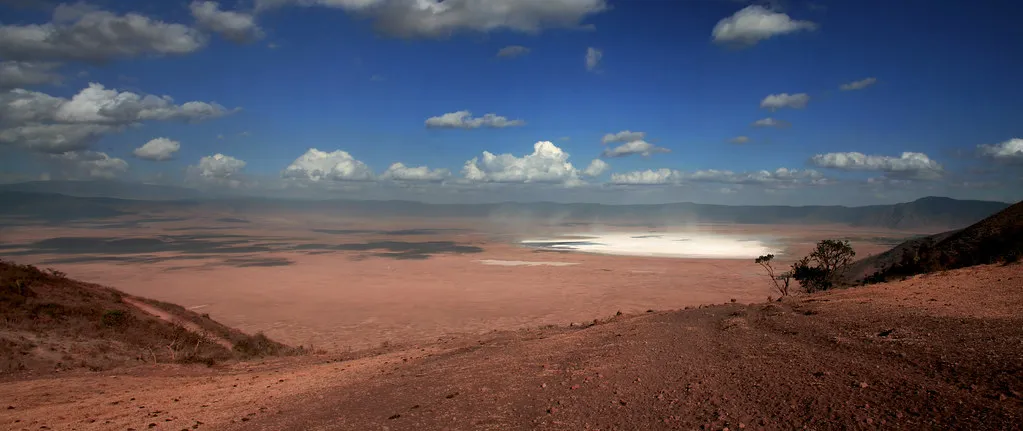
A collapsed volcanic world shelters lions, elephants, flamingos, and grassland drama inside one immense Tanzanian bowl.
Trip fit
Is Ngorongoro Crater right for your trip?
Best for
Can I realistically visit this?
Yes, through safari planning. Ngorongoro is established but best arranged with a reliable safari operator or lodge. Consider park fees, vehicle time, crater access, altitude, and how it fits with Serengeti or Lake Manyara.
Physical difficulty
Easy
Planning complexity
Better with local operator
Best time to go
Best: Jun-Oct. Good: Jan-Mar. Rainy: Apr-May, Nov.
Perfect for
- First-time safari travellers, wildlife photographers, families, and visitors who want high wildlife density in a dramatic natural amphitheatre
Not ideal if
- Travellers seeking cheap independent safari logistics or empty wilderness roads
Compare with similar places
Ngorongoro vs Etosha vs Kruger - safari landscapes with different wildlife density, independence, and cost.
Location
Where this place is
Ngorongoro Crater is in Tanzania / Africa, useful for wildlife, first-time africa trips and photography before you choose routes, bases, and timing.
Tanzania / Africa
Open location on Google Maps opens in a new tabRegional orientation only. Open Google Maps for exact location.
Travel essentials
Before you book the flight
Do you need a visa for Tanzania?
Start with the country visa-policy overview, then confirm current rules with an official source before booking.
Check visa requirements before booking
Start with the visa-policy overview, then confirm the current rules with an official embassy, consulate, or government source before booking non-refundable travel.
If using a visa service, compare processing times, fees, refund rules, and whether they cover your nationality.
Optional visa service comparison opens in a new tab- 1 EUR ≈ 3004 TZS
- 1 USD ≈ 2627 TZS
- 1 GBP ≈ 3532 TZS
Exchange Rates Updated Daily. Last updated on 19/Jul/2026.

No McDonald’s benchmark available.
Use local café / fast-food meal prices instead.
Approximate McDonald’s Big Mac® price where available. Prices vary by city, branch, tax, delivery channel, and date checked. This site is not affiliated with or endorsed by McDonald’s.
Source: Countries with McDonald's restaurants reference
No reliable McDonald's/Big Mac benchmark found; likely no official McDonald's presence
Prices Researched at May 2026
Where to stay
8+ rated stays for Ngorongoro Crater
Booking.com opens with an 8+ guest-score filter for Ngorongoro Crater, so you can compare current hotel photos, availability, prices, and recent traveler reviews before choosing a base.
8+ guest review score on Booking.com

Why it is beautiful
Ngorongoro is a caldera — a collapsed volcanic crater — roughly 20 km across and 600 metres deep, forming a self-contained ecosystem that has never been enclosed by fences yet holds approximately 25,000 large animals on its flat floor, including one of Africa’s densest lion populations and a permanent resident black rhino population. The rim sits at 2,300 metres and is usually in cloud in the morning; descending the crater wall through the mist and emerging into grassland, soda lake, and forest below is one of East Africa’s most cinematic moments. The alkaline Lake Magadi at the crater floor attracts flamingos in the thousands during the right season. Ngorongoro is not wilderness in the traditional sense — it is managed, fee-intensive, and busy with vehicles — but the concentration of wildlife in a single dramatic bowl makes it arguably the easiest place on Earth to see the African Big Five in a single day.
10 practical tips to help you decide
These tips are designed to help you decide whether Ngorongoro Crater fits your time, budget, comfort level, and travel style.
-
For first-time safari travellers, wildlife photographers, and families who want the highest possible wildlife density in a dramatic landscape — not those seeking empty roads or cheap independent logistics. Ngorongoro delivers more animal sightings per hour of game drive than almost anywhere in Africa. It is managed, fee-heavy, and rarely feels remote, but the wildlife concentration is extraordinary. Skip it if you specifically want wilderness solitude — the Serengeti’s northern circuits or Ruaha offer that instead.
-
June to October for the best dry-season wildlife viewing; January to February for green season with fewer vehicles. The dry season (June–October) concentrates wildlife around water sources, keeps roads firmer, and gives the best photography light. July and August are the busiest months. January to March is the green season — grass is tall and some animals harder to spot, but the crater is lush, migratory bird numbers are high, and vehicle numbers drop. April and May are the wettest months with the most access difficulty.
-
Fly into Kilimanjaro Airport (JRO) or Arusha (ARK) — all Ngorongoro trips depart from Arusha. Kilimanjaro International Airport (JRO) handles international flights from Amsterdam, Addis Ababa, Dubai, and Nairobi. Arusha Airport (ARK) serves domestic routes from Dar es Salaam and Zanzibar. Arusha is the gateway for all northern Tanzania safari circuits including Ngorongoro, Serengeti, and Tarangire. Tanzania requires a visa for most Western nationals: apply for an e-visa at immigration.go.tz before departure. Check the UK FCDO Tanzania travel advice for current entry requirements.
-
One to two crater days is the typical allocation; plan three to four nights in the wider Ngorongoro Conservation Area. A single crater day (maximum 6 hours on the floor per vehicle per day) is possible but rushed. Two days allows an early-morning descent on the first day and a second descent targeting different wildlife. Most visitors spend two to three nights on the crater rim, then combine with Serengeti (3–4 more nights) or Lake Manyara (one night) in a circuit of five to seven days total from Arusha.
-
Stay on the crater rim for the combination of views and early access to the crater descent. Rim lodges range from mid-range (Ngorongoro Sopa Lodge, Wildlife Lodge) to luxury (Crater Lodge). Rim accommodation at 2,300 metres gives cool evenings — pack a warm layer. Staying on the rim rather than outside the Conservation Area means you reach the crater descent road first in the morning before other vehicles arrive. Lodge prices vary dramatically: compare directly and by season.
-
Ngorongoro is expensive — Conservation Area fees alone are substantial. Park fees for Ngorongoro Conservation Area (NCA) are currently USD 70.80 per person per day (foreign non-residents) with additional vehicle fees and crater service fees. These fees apply on top of guide, vehicle, and accommodation costs. A typical 2-day crater visit through a mid-range safari operator from Arusha runs USD 500–900 per person per day all-inclusive. Budget realistically and compare several Arusha-based operators before booking.
-
Book with a reputable Arusha-based safari operator and verify their NCA licensing. Independent vehicle hire to the crater is technically possible but requires an NCA-registered 4WD and guide. Most visitors book through Arusha safari operators who handle permits, vehicles, drivers, and accommodation. Vetting operators matters — compare reviews on TripAdvisor and SafariBookings, ask for NCA registration numbers, and confirm crater floor time, guide quality, and vehicle standards before paying. The UK FCDO Tanzania advice notes Tanzania is broadly safe for tourists with standard precautions.
-
Descend by 7am for the best light and fewest vehicles on the crater floor. The crater descent gate opens at 6am. Vehicles that arrive first get the crater floor before the midday rush of jeeps. Morning light also gives the best photography — the eastern rim catches the sunrise, and lions are typically most active in the cooler morning hours. Pack a full day’s provisions and water, as there are no facilities on the crater floor. Return to the rim gate by 6pm (or earlier — confirm current rules with your operator).
-
The black rhino population makes Ngorongoro Africa’s best place to see this species in the wild. Tanzania’s Ngorongoro crater holds one of the continent’s last significant populations of critically endangered black rhino — around 20–30 individuals. Rhino sightings are not guaranteed but more likely here than almost anywhere else in Africa. Request that your driver/guide prioritise the rhino areas of the southern crater floor. Binoculars are essential — rhino can be distant.
-
Combine Ngorongoro with the Serengeti for a complete northern Tanzania circuit. The Serengeti is 3 hours from Ngorongoro by road and shares the same ecosystem. Adding three to four nights in the Serengeti (central Seronera for year-round wildlife; northern Kogatende for July–October river crossings) transforms a Ngorongoro trip into one of Africa’s great safari itineraries. Olduvia Gorge — where some of the earliest human fossil remains were found — is a 45-minute detour between the two parks and worth the stop.