
Africa / Botswana
Okavango Delta
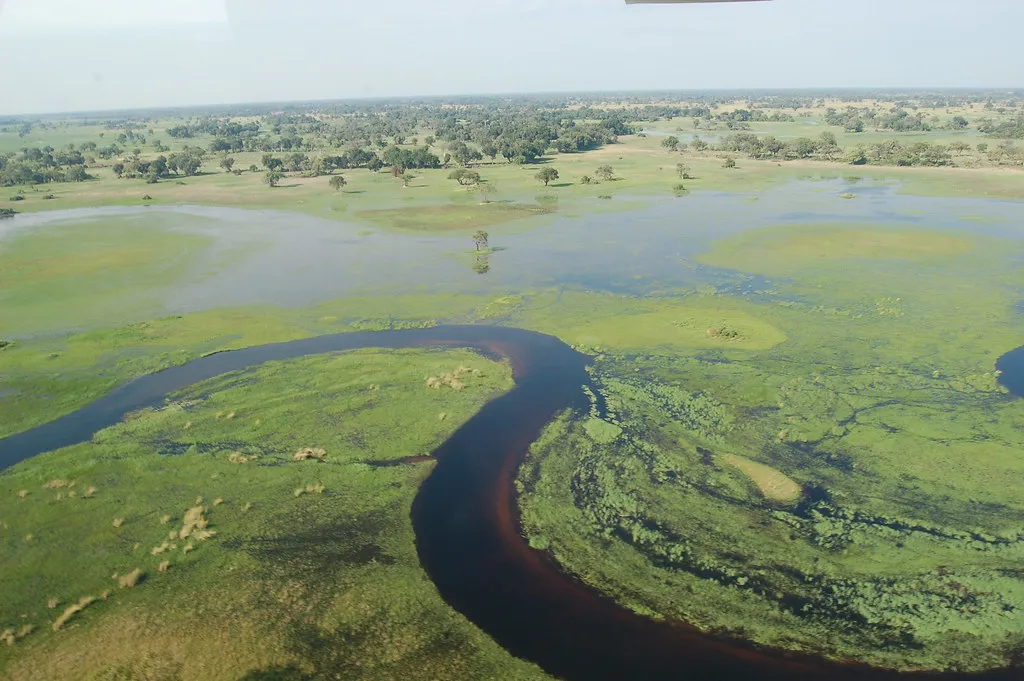
Floodwater spreads into desert and becomes a maze of reeds, channels, elephants, mokoros, and impossible green life.
Trip fit
Is Okavango Delta right for your trip?
Best for
Can I realistically visit this?
Yes, but it is usually a planned safari rather than a casual add-on. Maun is the practical gateway for operators, air charters, lodges, car rental, and transfers. Book early for prime season.
Physical difficulty
Easy to moderate (camp life, light boating)
Planning complexity
Specialist trip / needs careful operator choice and small-aircraft transfers
Best time to go
Best: Jun-Oct. Good: May, Nov. Rainy / green season: Dec-Apr.
Perfect for
- Safari travellers wanting a slower, water-based experience, photographers, and honeymooners.
Not ideal if
- Travellers on tight budgets or those wanting fast-moving sightseeing.
Compare with similar places
Okavango Delta vs Etosha vs Pantanal - water-shaped wildlife regions where silence and reflection are part of the appeal.
Location
Where this place is
Okavango Delta is in Botswana / Africa, useful for wildlife, first-time africa trips and photography before you choose routes, bases, and timing.
Botswana / Africa
Open location on Google Maps opens in a new tabRegional orientation only. Open Google Maps for exact location.
Travel essentials
Before you book the flight
Do you need a visa for Botswana?
Start with the country visa-policy overview, then confirm current rules with an official source before booking.
Check visa requirements before booking
Start with the visa-policy overview, then confirm the current rules with an official embassy, consulate, or government source before booking non-refundable travel.
If using a visa service, compare processing times, fees, refund rules, and whether they cover your nationality.
Optional visa service comparison opens in a new tab- 1 EUR ≈ 16.04 BWP
- 1 USD ≈ 14.03 BWP
- 1 GBP ≈ 18.86 BWP
Exchange Rates Updated Daily. Last updated on 19/Jul/2026.
No McDonald’s benchmark available.
Use local café / fast-food meal prices instead.
Approximate McDonald’s Big Mac® price where available. Prices vary by city, branch, tax, delivery channel, and date checked. This site is not affiliated with or endorsed by McDonald’s.
Source: Countries with McDonald's restaurants reference
No reliable McDonald's/Big Mac benchmark found; likely no official McDonald's presence
Prices Researched at May 2026
Where to stay
8+ rated stays for Okavango Delta
Booking.com opens with an 8+ guest-score filter for Okavango Delta, so you can compare current hotel photos, availability, prices, and recent traveler reviews before choosing a base.
8+ guest review score on Booking.com

Why it is beautiful
The Okavango is an anomaly: a river that begins in the Angolan highlands, flows south-east for 1,000 kilometres, and then fans into the Kalahari desert — not reaching the sea but spreading into channels, lagoons, reed beds, and papyrus islands that cover up to 15,000 square kilometres at peak flood. The flood peak is counterintuitive — rain falls in Angola in December and January, but the water takes months to arrive, so the delta is at its fullest in the Botswana dry season (June to August) when the surrounding landscape is parched. Elephants wade between islands, hippos hold channels, and a mokoro (dugout canoe) at water level in a papyrus corridor in the early morning — surrounded by birdsong, floating lilies, and reflected sky — is one of the quietest and most complete experiences Africa offers.
10 practical tips to help you decide
These tips are designed to help you decide whether the Okavango Delta fits your time, budget, comfort level, and travel style.
-
For safari travellers wanting a slower, water-based experience and wildlife photographers — not those on tight budgets or wanting fast-moving sightseeing. The Okavango is not a typical game-drive safari destination. It is a place of stillness, mokoro channels, elephant-island crossings, and birdsong at dawn. It rewards visitors who are willing to slow down and stay several nights. It is also one of Africa’s most expensive safari destinations — build budget expectations accordingly before planning.
-
June to September for peak wildlife and flood levels; May and October as shoulder months. The flood peaks in July to August, when water channels are full, islands are isolated, and wildlife concentrates on dry ground surrounded by water. This is the prime wildlife window. June and September are slightly less intense but still excellent. May sees the flood arriving; October has retreating water but good game concentrations. December to March is the green season — the delta is beautiful but wildlife is dispersed and some camps reduce operations.
-
Fly into Maun (MUB) — all Okavango Delta trips originate here. Maun’s airport connects to Johannesburg (2 hours, daily on SAA and Airlink), Kasane (for Chobe), and Windhoek. Most delta lodges arrange onward light-aircraft transfers from Maun (15–45 minute flights onto bush airstrips). Botswana gives 90-day visa-free entry to most Western nationals on arrival. Check the UK FCDO Botswana travel advice for current entry requirements.
-
Three to four nights minimum in the delta; five to seven for a full Botswana circuit. Three nights at one camp gives a complete delta experience: morning mokoro, afternoon game drive, walking safari, and evening around the fire. Four nights allows a second camp with a different character (permanent water vs floodplain). Adding Chobe National Park (two nights, for elephant concentrations and river safaris) to a Maun–delta circuit makes a five to seven day trip that covers Botswana’s best wildlife areas.
-
Book lodges months ahead for the June–September peak and arrange light-aircraft transfers through your lodge. The best camps in the Okavango (Mombo, Little Vumbura, Chitabe, Xigera, and others) book out 6–12 months ahead for peak season. Book through a specialist southern Africa travel agent or directly with lodge operators. Lodge bookings typically include all meals, activities, and the local light-aircraft transfer from Maun — confirm what is included before comparing prices.
-
The Okavango is expensive — budget USD 500–1,500+ per person per night for most camps. Botswana deliberately positions itself as a high-value, low-volume destination, and Okavango camp prices reflect this. Mid-range permanent tented camps run USD 400–700 per person per night all-inclusive. Premium photographic camps and iconic lodges run USD 1,000–2,000. Budget operators using mobile camping run lower, but the delta is not a cheap-travel destination. Plan the total cost including flights to Maun before committing.
-
Take malaria precautions — the delta is a malaria-risk area. The Okavango Delta is in a malaria-endemic zone. Take a reputable prophylaxis (consult your GP or travel clinic for current recommendations), use DEET repellent, wear long sleeves and trousers at dusk and dawn, and sleep under mosquito nets where provided. The UK FCDO Botswana travel advice confirms the malaria risk and recommends precautions year-round, with highest risk during the wet season. Risk exists even in the dry season.
-
A mokoro trip at dawn is the single most immersive thing you can do in the delta. A mokoro is a traditional dugout canoe poled through shallow channels by a guide standing at the stern. At water level among papyrus reeds, with hippos audible and kingfishers passing at eye height, the experience of the delta is completely different from a game vehicle. All quality camps include mokoro excursions; request a morning departure for the best light and the coolest temperatures. Expect 1.5–3 hours on the water.
-
Moremi Game Reserve on the eastern delta gives the best game-drive wildlife combination. Moremi covers the eastern side of the Okavango and is one of Africa’s most wildlife-rich conservation areas — lions, leopards, wild dogs, elephants, and hippos all present. Camps inside or bordering Moremi (such as Xakanaxa, Khwai, and Chief’s Island) combine game drives with water access. The delta experience without Moremi is water-focused; Moremi brings the game-drive dimension. The combination in one trip is the ideal.
-
Combine the Okavango with Chobe for a complete Botswana trip. Chobe National Park (4 hours from Maun by road or a short charter flight) has the world’s largest elephant concentration — herds of several hundred on the Chobe River. A Maun–Okavango–Chobe–Victoria Falls circuit covers the best of Botswana and Zimbabwe in seven to ten days and is one of southern Africa’s classic itineraries. Victoria Falls is 1.5 hours from Kasane by road or a short charter, making it a natural endpoint before flying home.