
North America / Washington State, USA
Olympic National Park
Rainforest, glacier peaks, moss valleys, driftwood beaches, and stormy Pacific edges all collide in one Washington wilderness.
Trip fit
Is Olympic National Park right for your trip?
Best for
Can I realistically visit this?
Yes. Olympic is accessible as a road trip, but the park is large and varied. Plan by area: rainforest, coast, lake, mountains, or a loop route. Weather and drive times matter.
Physical difficulty
Easy to strenuous, depending on route
Planning complexity
Needs some planning
Best time to go
Best: Jun-Sep. Good: May, Oct. Rainy / possible: Nov-Apr.
Perfect for
- Families, hikers, photographers, road-trippers, forest lovers, and travellers who like varied landscapes in one trip
Not ideal if
- Visitors who want guaranteed sun or who underestimate park distances
Compare with similar places
Olympic National Park vs Denali vs Carpathian Mountains - accessible wild landscapes with forest, mountain, and weather character.
Location
Where this place is
Olympic National Park is in Washington State, USA / North America, useful for hiking, dramatic landscapes and photography before you choose routes, bases, and timing.
Washington State, USA / North America
Open location on Google Maps opens in a new tabRegional orientation only. Open Google Maps for exact location.
Travel essentials
Before you book the flight
Do you need a visa for USA?
Start with the country visa-policy overview, then confirm current rules with an official source before booking.
Check visa requirements before booking
Start with the visa-policy overview, then confirm the current rules with an official embassy, consulate, or government source before booking non-refundable travel.
If using a visa service, compare processing times, fees, refund rules, and whether they cover your nationality.
Optional visa service comparison opens in a new tab- 1 EUR ≈ 1.14 USD
- 1 GBP ≈ 1.34 USD
Exchange Rates Updated Daily. Last updated on 19/Jul/2026.

Big Mac® benchmark: approx. 6.12 USD
Checked: January 2026. Prices vary by city and branch.
Approximate McDonald’s Big Mac® price where available. Prices vary by city, branch, tax, delivery channel, and date checked. This site is not affiliated with or endorsed by McDonald’s.
Source: The Economist Big Mac Index country-level data
Country-level Big Mac price from The Economist Big Mac Index
Prices Researched at May 2026
Where to stay
8+ rated stays for Olympic National Park
Booking.com opens with an 8+ guest-score filter for Olympic National Park, so you can compare current hotel photos, availability, prices, and recent traveler reviews before choosing a base.
8+ guest review score on Booking.com

Why it is beautiful
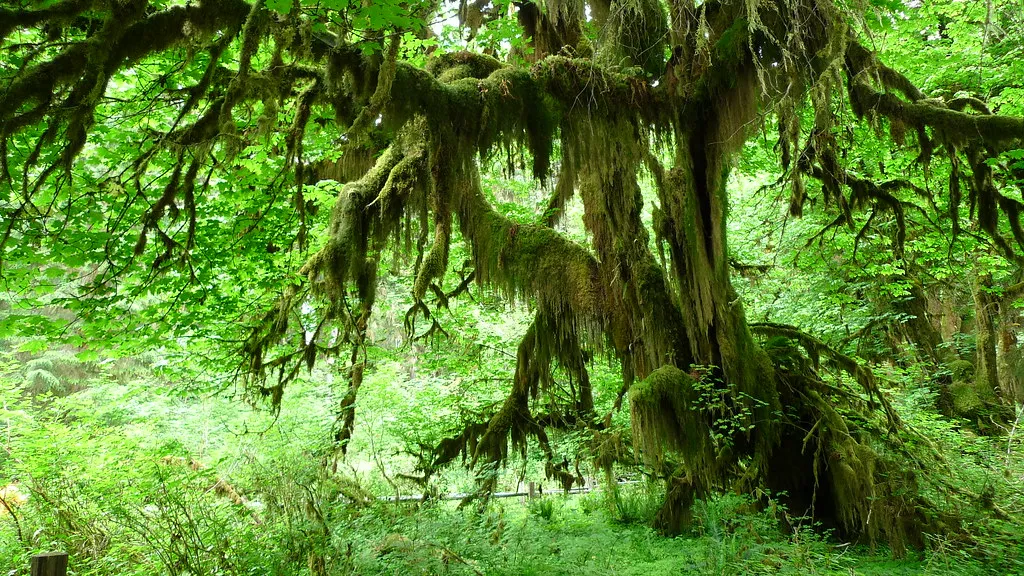
Olympic National Park on Washington’s Olympic Peninsula contains three completely separate ecosystems within one park boundary: a temperate rainforest receiving up to 3.7 metres of rain per year, a spine of glaciated alpine peaks rising to 2,428 metres at Mount Olympus, and 130 kilometres of wild Pacific coastline covered in sea stacks, driftwood, and tidal pools. The Hoh Rain Forest — where bigleaf maple trees are draped in hanging moss and the forest floor is a continuous carpet of club moss and fern — looks unlike any landscape in the continental United States. The park’s isolation on a peninsula with no through-road forcing visitors to circle rather than cut across adds to the sense that this is genuinely separate terrain from the rest of the Pacific Northwest.
10 practical tips to help you decide
These tips are designed to help you decide whether Olympic National Park fits your time, budget, comfort level, and travel style.
-
For families, hikers, forest lovers, and road-trippers who want three completely different landscapes in one trip — not those expecting guaranteed sun or who underestimate park distances. Olympic rewards visitors who plan by area and embrace the weather. The rainforest is extraordinary even (especially) in rain; the coast is dramatic in any conditions; the mountains are only accessible July to September. Skip it if you need reliable sunshine — the Olympic Peninsula is one of the wettest places in the continental US.
-
July to September for the driest trails and alpine access; October for golden rainforest with fewer visitors. The park is accessible year-round, but July to September gives the best chance of clear days on Hurricane Ridge, snow-free alpine trails, and dry coastal beach days. October reduces crowds sharply and turns the rainforest gold and amber — an excellent photography window. November to May means heavy rain, snow-closed mountain roads, and reduced park services, but the Hoh and Quinault rainforests are at their most atmospheric.
-
Drive or fly into Seattle, then take the ferry or Hood Canal Bridge to the Olympic Peninsula. Most visitors fly into Seattle-Tacoma International (SEA) and drive — 2.5 hours to Port Angeles (north entrance) or 3.5 hours to Forks/Hoh (west entrance). The Edmonds–Kingston or Seattle–Bainbridge ferries cross Puget Sound and cut the route. There is no public transit to the park interior — a car is essential. ESTA is required for most non-US Western nationals (apply at esta.cbp.dhs.gov, USD 21); check the UK FCDO USA travel advice for current requirements.
-
Three to four days to cover the three main ecosystems; five days if you want coastal backpacking. Three days gives one day each for Hurricane Ridge (alpine), Hoh Rain Forest (rainforest trail to Hall of Mosses, and the longer Hoh River Trail), and the Pacific coast (Rialto Beach, Ruby Beach, or Kalaloch). A fourth day adds Lake Crescent, Sol Duc hot springs, or a longer rainforest walk. Five days opens the coastal backpacking route between Oil City and La Push — one of the Pacific Northwest’s best multi-day hikes.
-
Base in Port Angeles for northern access; Forks or Lake Quinault for the rainforest and coast. Port Angeles is the largest gateway town, with the widest choice of accommodation and ferry access to Victoria, BC. It sits 45 minutes from Hurricane Ridge and 1 hour from Lake Crescent. Forks is the base for the Hoh Rain Forest and nearby Pacific beaches. Lake Quinault Lodge on the park’s southern edge is the most atmospheric single accommodation — a 1926 national park lodge on a lake surrounded by old-growth forest.
-
Olympic is affordable compared to other major national parks — the America the Beautiful pass is the best value if visiting multiple parks. The Olympic National Park entrance fee is USD 35 per vehicle (valid 7 days). The America the Beautiful Annual Pass (USD 80) covers all 400+ national parks and federal recreation areas — essential if visiting more than 2–3 parks in a year. Accommodation ranges from free wilderness camping to USD 150–350 per night at Lake Quinault Lodge. Port Angeles and Forks have standard mid-range hotels at USD 80–150 per night.
-
No visa required for most Western nationals with ESTA — the US is straightforward to enter for tourist visits. UK, EU, Australian, and Canadian nationals can travel to the US without a visa under the Visa Waiver Program (ESTA), valid for 90 days. ESTA costs USD 21 and must be approved before departure at esta.cbp.dhs.gov. The UK FCDO describes the US as very safe for tourists with standard travel precautions; the Olympic Peninsula specifically has no significant safety concerns.
-
The Hoh Rain Forest is the park’s most singular experience — take the Hall of Mosses trail as a minimum. The Hall of Mosses trail (1.25 km / 0.8 miles) loops through a grove of ancient bigleaf maple draped in hanging club moss, with old-growth Sitka spruce and Douglas fir on the surrounding slopes. It takes about 45 minutes but most visitors slow to a stop repeatedly. The longer Hoh River Trail continues 27 km upvalley toward Mount Olympus for those staying overnight — even the first 5 km delivers complete rainforest immersion.
-
Ruby Beach and Rialto Beach are the most accessible Pacific coastline experiences. Ruby Beach (off Highway 101 south of Kalaloch) has sea stacks, tidepools, and driftwood beaches without requiring a trail hike. Rialto Beach near La Push gives a wilder feel with a 3 km walk to Hole-in-the-Wall, a natural arch accessible at low tide. Check tide tables before visiting coastal areas — the sea stacks and arches are most dramatic at lower tides. Beach fires are permitted in some areas; check current NPS rules.
-
Hurricane Ridge gives the alpine dimension — drive it in the morning for clearest mountain views. The Hurricane Ridge road climbs from Port Angeles to 1,676 metres in 28 km, with the visitor centre giving views across the glaciated Olympic peaks and north to Vancouver Island and the Strait of Juan de Fuca. It is typically open late May to October (weather permitting) and weekends in winter for snowshoeing. Go in the morning before afternoon cloud builds. Marmots, black-tailed deer, and mountain goats are regularly seen near the ridge.