
Europe / Greece
Santorini
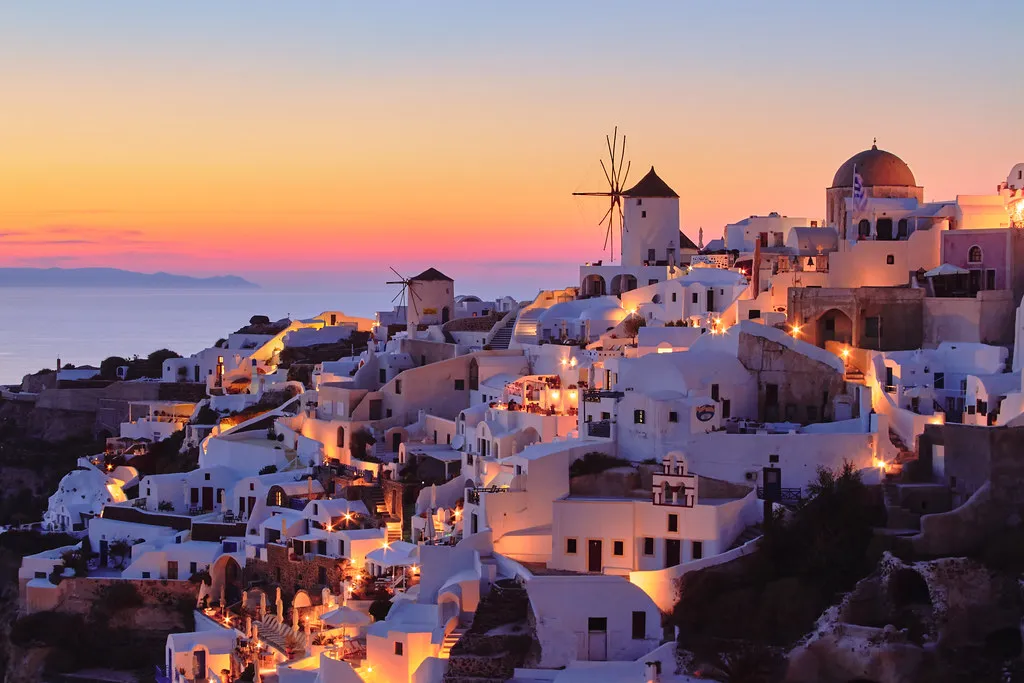
White villages cling to a volcanic caldera above Aegean blue, with sunset light turning the cliffs almost unreal.
Trip fit
Is Santorini right for your trip?
Best for
Can I realistically visit this?
Yes. Santorini is easy to reach and highly developed, but the key is managing crowds, prices, heat, and location. Choose your base carefully and consider shoulder season.
Physical difficulty
Easy to moderate because of steps and heat
Planning complexity
Easy independent trip
Best time to go
Best: Apr-Jun, Sep-Oct. Good: Mar, Nov. Crowded / Very hot: Jul-Aug. Possible: Dec-Feb.
Perfect for
- Couples, photographers, sunset seekers, caldera views, boutique stays, and first-time Greek island visitors
Not ideal if
- Travellers seeking empty beaches, low prices, or quiet villages in peak summer
Compare with similar places
Santorini vs Malta vs Venice - Mediterranean beauty where architecture, water, and crowds all matter.
Location
Where this place is
Santorini is in Greece / Europe, useful for photography, easy luxury trips and culture and architecture before you choose routes, bases, and timing.
Greece / Europe
Open location on Google Maps opens in a new tabRegional orientation only. Open Google Maps for exact location.
Travel essentials
Before you book the flight
Do you need a visa for Greece?
Start with the country visa-policy overview, then confirm current rules with an official source before booking.
Check visa requirements before booking
Start with the visa-policy overview, then confirm the current rules with an official embassy, consulate, or government source before booking non-refundable travel.
If using a visa service, compare processing times, fees, refund rules, and whether they cover your nationality.
Optional visa service comparison opens in a new tab- 1 USD ≈ 0.8745 EUR
- 1 GBP ≈ 1.18 EUR
Exchange Rates Updated Daily. Last updated on 19/Jul/2026.
Big Mac® benchmark: approx. 6.08 EUR
Checked: January 2026. Prices vary by city and branch.
Approximate McDonald’s Big Mac® price where available. Prices vary by city, branch, tax, delivery channel, and date checked. This site is not affiliated with or endorsed by McDonald’s.
Source: The Economist Big Mac Index country-level data
Euro area proxy from The Economist Big Mac Index, not destination-specific
Prices Researched at May 2026
Where to stay
8+ rated stays for Santorini
Booking.com opens with an 8+ guest-score filter for Santorini, so you can compare current hotel photos, availability, prices, and recent traveler reviews before choosing a base.
8+ guest review score on Booking.com
Why it is beautiful
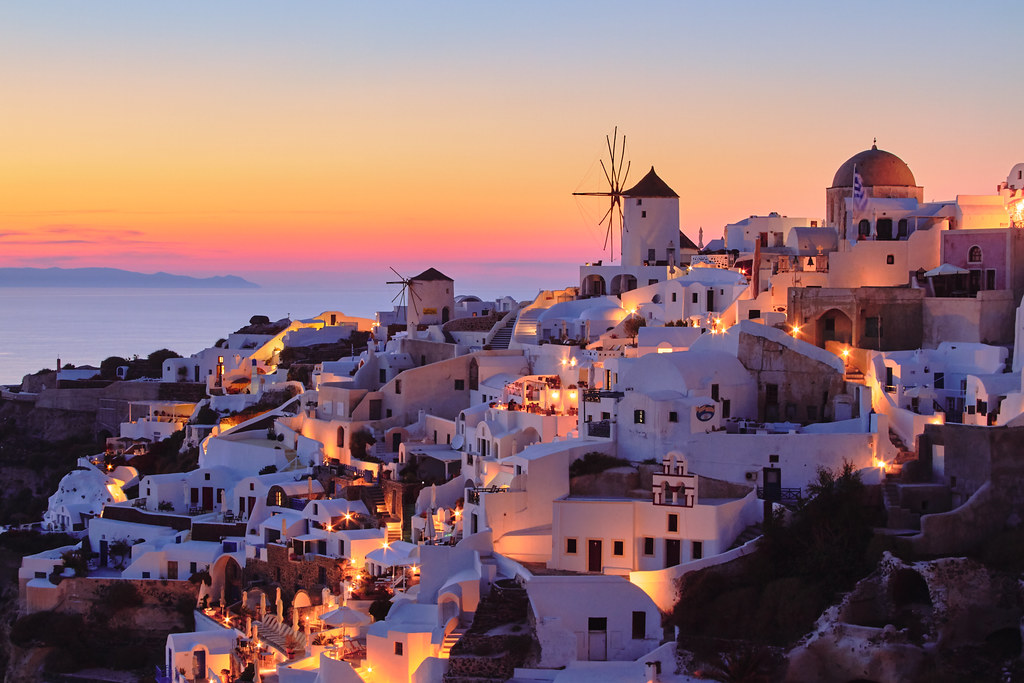
Santorini is the collapsed remnant of a Minoan-era supervolcano whose eruption around 1600 BC was one of the largest in recorded geological history, leaving a deep, flooded caldera surrounded by crescent-shaped cliffs that drop 300 metres to the sea. The whitewashed villages of Oia and Fira — built on the cliff-edge in blue-domed Cycladic clusters — face west across the caldera, which is why the sunset turns them from brilliant white to deep amber and pink before the light fades over the sea. The Aegean in the caldera is a shade of blue that photographs struggle to render accurately. The combination of volcanic cliff, Cycladic white and blue, and the specific quality of Aegean light in the late afternoon is genuinely unlike anywhere else in the Mediterranean, which is why it is also one of the world’s most photographed places.
10 practical tips to help you decide
These tips are designed to help you decide whether Santorini fits your time, budget, comfort level, and travel style.
-
For couples, caldera-view photographers, boutique hotel guests, and first-time Greek island visitors — not those seeking quiet beaches, low prices, or empty villages in summer. Santorini is one of Greece’s most developed and expensive islands, with crowds in July and August that make the caldera-path experience genuinely congested. It rewards visitors who go in shoulder season, choose a base outside Oia, and manage timing to avoid cruise-ship arrivals. The landscape itself is extraordinary; the management of your experience around it determines the trip.
-
April to June and September to October for caldera walks without the peak cruise-ship congestion. May and June give warm evenings (20–25°C), manageable crowds, and the full sunset colour without July’s intense heat and visitor volume. September is arguably the best month: warm sea (24°C), fewer cruise ships, and afternoon light that is lower and warmer than summer. October is cooler but still pleasant and very quiet. July and August are 35°C+ with 10,000+ daily cruise visitors walking the Fira–Oia path.
-
Fly into Santorini Thira Airport (JTR) or arrive by ferry from Athens (Piraeus) — both are straightforward. Santorini Airport handles direct flights from Athens (45 minutes, multiple daily) and seasonal direct European charter and scheduled flights. The Piraeus–Santorini ferry takes 5–8 hours depending on the service (high-speed catamaran or conventional ferry). No visa is needed for EU, UK, and most Western nationals — Greece is a Schengen member. The 90-day Schengen rule applies across all member states.
-
Three to four days to see the island properly without rushing the caldera highlights. Two days gives Oia, Fira, the Fira-to-Oia cliff walk (10 km, 3 hours), and a sunset. A third day works for a boat trip to the volcanic islets (Nea Kameni hot springs, Thirassia island), Red Beach, and Akrotiri archaeological site (a remarkably preserved Bronze Age city). A fourth day allows Pyrgos village, the winery area, and a quieter eastern coast beach like Perivolos or Perissa.
-
Stay in Imerovigli or Firostefani rather than Oia for better value and fewer crowds at the same caldera views. Oia is the most photographed village and commands the highest prices — caldera-view boutique hotels run €400–1,500+ per night in peak season. Imerovigli, 2 km south of Oia along the cliff path, has comparable views at lower prices and fewer cruise-ship day-trippers. Firostefani, between Imerovigli and Fira, is quieter still. The Fira–Oia path connects all three so the sunset can be watched from any point.
-
Santorini is expensive — one of Greece’s highest-cost islands. Caldera-view hotels run €200–600 per night in shoulder season; infinity-pool suites in peak season are considerably more. Restaurants on the caldera-view terraces run €35–80 per person for a full meal. Black-sand beach tavernas are cheaper. Wine — Santorini’s Assyrtiko white from the volcanic soil is excellent — starts at €25–40 per bottle at restaurants. Budget roughly €200–400 per person per day including accommodation and meals in shoulder season.
-
No visa required for most Western visitors — Greece is an EU and Schengen member. EU nationals travel freely. UK visitors currently enter visa-free post-Brexit; the EU’s ETIAS (European Travel Information and Authorisation System) for UK and non-EU nationals is expected to launch in 2025 — check the current position via the UK FCDO Greece travel advice before booking. US, Canadian, and Australian nationals get 90 days visa-free under Schengen. The FCDO rates Greece as very safe for tourists; petty theft at beaches and tourist sites is the main minor concern.
-
Walk the Fira-to-Oia cliff path for the best sense of the island’s volcanic scale. The 10 km path along the caldera rim from Fira to Oia passes through Imerovigli and Skaros Rock, with uninterrupted views of the caldera below and the islands of Thirassia and Nea Kameni ahead. Allow 3–3.5 hours in one direction. The path is rocky and uneven in sections — wear proper footwear and carry water. The return to Fira can be done by local bus from Oia or by cable car from Fira down to the port (where there are also donkey rides, which are controversial — the cable car is the considerate choice).
-
Visit Akrotiri archaeological site early morning before the heat and crowds. Akrotiri is a Bronze Age Minoan city preserved under volcanic ash, comparable in significance to Pompeii but 1,000 years older. The entire site is under a modern roof structure; wall paintings, storage jars, and multi-storey building remains are visible. Entry runs €8–12; allow 1.5–2 hours. The site opens at 8am — go early to avoid midday heat under the roof and arrive before tour groups from cruise ships.
-
Take the boat trip to the volcanic islets for the geological context the island itself doesn’t give. Half-day boat tours from Fira’s old port visit Nea Kameni (the active volcano in the caldera centre, where you can walk to the sulphurous crater) and the hot springs at Palea Kameni. Seeing the caldera from water level — looking back up at the 300-metre cliffs with the white villages on top — reverses the perspective completely and makes the volcanic scale visceral in a way the cliff-top view doesn’t. Book at the port or through your hotel.