
South America / Chile and Argentina
Southern Patagonia
Glaciers, granite towers, blue lakes, and ferocious wind give the far south a raw end-of-the-world beauty.
Trip fit
Is Southern Patagonia right for your trip?
Best for
Can I realistically visit this?
Yes, but give it time. Southern Patagonia is not difficult because of one single barrier; it is difficult because of distance, weather, wind, seasonal demand, and the temptation to overpack the itinerary.
Physical difficulty
Moderate to strenuous
Planning complexity
Needs some planning
Best time to go
Best: Dec-Mar. Good: Nov, Apr. Closed / limited access: May-Oct for many hiking plans.
Perfect for
- Hikers, photographers, road-trippers, glacier lovers, and travellers who can leave space for bad weather
Not ideal if
- Visitors who want warm, settled weather or a fast checklist-style trip
Compare with similar places
Southern Patagonia vs Fitz Roy vs Table Mountain - mountain landscapes from expedition-scale wilderness to city-edge drama.
Location
Where this place is
Southern Patagonia is in Chile and Argentina / South America, useful for dramatic landscapes, hiking and photography before you choose routes, bases, and timing.
Chile and Argentina / South America
Open location on Google Maps opens in a new tabRegional orientation only. Open Google Maps for exact location.
Travel essentials
Before you book the flight
Check visa rules for Chile and Argentina
Start with the country visa-policy overview, then confirm current rules with an official source before booking.
Check visa requirements before booking
Start with the visa-policy overview, then confirm the current rules with an official embassy, consulate, or government source before booking non-refundable travel.
If using a visa service, compare processing times, fees, refund rules, and whether they cover your nationality.
Optional visa service comparison opens in a new tab- 1 EUR ≈ 1057 CLP
- 1 USD ≈ 924.7 CLP
- 1 GBP ≈ 1243 CLP
Exchange Rates Updated Daily. Last updated on 19/Jul/2026.

Big Mac® benchmark: approx. 4790 CLP
Checked: January 2026. Prices vary by city and branch.
Approximate McDonald’s Big Mac® price where available. Prices vary by city, branch, tax, delivery channel, and date checked. This site is not affiliated with or endorsed by McDonald’s.
Source: The Economist Big Mac Index country-level data
Country-level Big Mac price from The Economist Big Mac Index
Prices Researched at May 2026
Where to stay
8+ rated stays for Southern Patagonia
Booking.com opens with an 8+ guest-score filter for Southern Patagonia, so you can compare current hotel photos, availability, prices, and recent traveler reviews before choosing a base.
8+ guest review score on Booking.com

Why it is beautiful
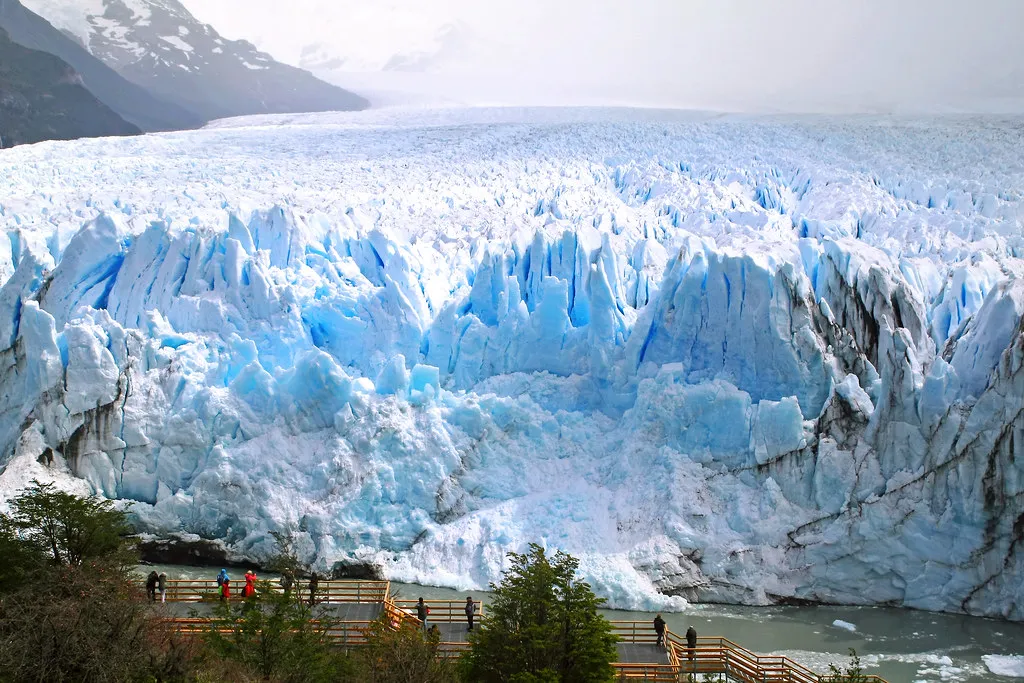
Southern Patagonia straddles the southern Andes across Chile and Argentina south of latitude 50°, where glaciers calve into turquoise lakes, granite towers rise directly from the pampas, and the wind is strong enough to knock hikers off their feet in exposed sections. Torres del Paine National Park in Chile anchors the Chilean side — the Torres (granite pillars), Grey Glacier, and Los Cuernos ridgeline visible from almost any point in the circuit. El Chaltén in Argentina is the trekking capital for Fitz Roy and Cerro Torre, two of the most technically challenging peaks in the Andes and two of the world’s most photographed mountains. Perito Moreno Glacier, accessible from El Calafate, is one of the few advancing glaciers in the world and can be watched for hours from a boardwalk as sections collapse into Lago Argentina. The distances are immense, the weather is brutal, and the landscape justifies every kilometre of it.
10 practical tips to help you decide
These tips are designed to help you decide whether Southern Patagonia fits your time, budget, comfort level, and travel style.
-
For hikers, glacier lovers, photographers, and road-trippers who can leave space for bad weather — not those wanting warm, settled weather or a fast checklist trip. Southern Patagonia operates on its own schedule: clear morning light on the Torres one day, horizontal rain and 100 km/h wind the next. The best experiences come to travellers who build weather buffer days and treat the unpredictability as part of the appeal. Arrive with flexibility built into the itinerary or leave frustrated.
-
November to March for trekking access and long days; December to February for the best conditions. The Patagonian season runs November to April. December to February gives the longest days (18+ hours of daylight), the best trekking conditions, and the most reliable glacier access. November is cold and windy but uncrowded. March is calmer and has fewer visitors than peak summer. May to October means most trails are closed or dangerous, Perito Moreno is visited in all-weather gear, and El Chaltén shuts down largely. Torres del Paine closes its backcountry circuit entirely outside November–April.
-
Fly into Punta Arenas (PUQ) for Chile or El Calafate (FTE) for Argentina — long-haul access requires connecting flights. Both airports connect to Santiago (Chile) and Buenos Aires (Argentina) respectively. There are no direct long-haul flights to Southern Patagonia from outside South America. From Santiago, Punta Arenas is 3 hours by domestic flight. From Buenos Aires, El Calafate is 3.5 hours. No visa is needed for most Western nationals in either Chile or Argentina — both give 90-day visa-free entry. Check the UK FCDO Chile travel advice and Argentina travel advice for current entry requirements.
-
Ten to fourteen days is the minimum for a meaningful Torres del Paine and El Calafate circuit; shorter trips shortchange the distances. A 10-day itinerary covers: Punta Arenas (1 day), Torres del Paine W Trek (5 days) or Circuit Trek (8–9 days), El Calafate and Perito Moreno (2 days), El Chaltén (2–3 days). The W Trek is the right length for most first-timers: it covers the Torres, Valle del Francés, and Grey Glacier in 5 days with lodge or camping options. Budget at least 2 weather buffer days across the 10-day plan.
-
Book Torres del Paine lodges and campsites 6–12 months ahead for peak season (December–February). Torres del Paine accommodation — both EcoCamp, Las Torres Lodge, and the camping refugios on the W and Circuit routes — books out by January for the coming December–February season. Book directly through CONAF-approved operators or platforms like Erratic Rock or the park’s own booking system. Cerro Castillo border crossing (Argentina to Chile) requires a day or half-day extra in the itinerary; book transfers between El Calafate and Puerto Natales in advance.
-
Costs are substantial — plan for high-season accommodation, park fees, and transfers. Torres del Paine park entry is currently CLP 45,000–55,000 per foreign adult per day (check at torrestorrespaine.cl before booking as fees increase annually). W Trek lodge accommodation (Los Torres, Mirador Las Torres, EcoCamp) runs USD 200–500 per person per night. Camping with cooking is cheaper but still requires booking and carrying gear. Add flights, transfers between Puerto Natales, El Calafate, and El Chaltén, and a 2-week Southern Patagonia trip typically runs USD 4,000–8,000 per person including flights.
-
Patagonia’s weather is its most important planning variable — read about it before booking. Wind speeds above 80 km/h are common and above 100 km/h are recorded weekly in some seasons. Rain can fall without warning. The same day can give sunshine, sleet, and horizontal rain in sequence. Wind and rain do not prevent great experiences — but they require preparation: windproof and waterproof layers, dry bags for pack contents, and a mindset that accepts a cloud-covered Torres as part of the story. The UK FCDO Chile travel advice and Argentina travel advice are straightforward — neither country poses elevated safety risks in this region.
-
Perito Moreno Glacier is the most accessible major Patagonian experience — visit from El Calafate. Perito Moreno is 80 km from El Calafate, easily reached by minibus transfer. An extensive wooden boardwalk system at multiple levels gives close views of the 5 km-wide ice face. The glacier advances year-round at approximately 2 metres per day and calves in spectacular slow-motion collapses that can be watched for hours. A half-day from El Calafate is enough; a full day allows a boat approach to the ice face and trekking on the glacier (crampons provided). No reservation needed for the boardwalk in shoulder season.
-
The Torres viewpoint at sunrise requires an early start — one of the trip’s highest-reward moments. The Laguna de los Torres sunrise (the basin at the base of the three granite pillars) requires a 2–3 hour hike from the Las Torres refugio starting at 4–5am. Arrived before first light, the towers gradually illuminate pink then gold as the sun rises over the Argentine steppe to the east — the photograph that defines Torres del Paine. The trail is well-marked; carry a headlamp, warm layers, and water. The trail is crowded on clear mornings in peak season.
-
Use El Chaltén as the Argentina base for Fitz Roy — no park fees, free trails, no booking required. El Chaltén is Argentina’s trekking capital — a purpose-built village at the edge of Los Glaciares National Park north section with free trail access from the village itself (no entrance fee for El Chaltén sector). Laguna de los Tres (21 km round-trip, 1,200 m elevation gain) gives the closest view of Fitz Roy’s vertical granite faces. Laguna Torre gives Cerro Torre views. Both are day hikes from the village with no booking requirement — the most accessible serious trekking in Southern Patagonia.