
Middle East / Istanbul, Turkey
Sultan Ahmed Mosque
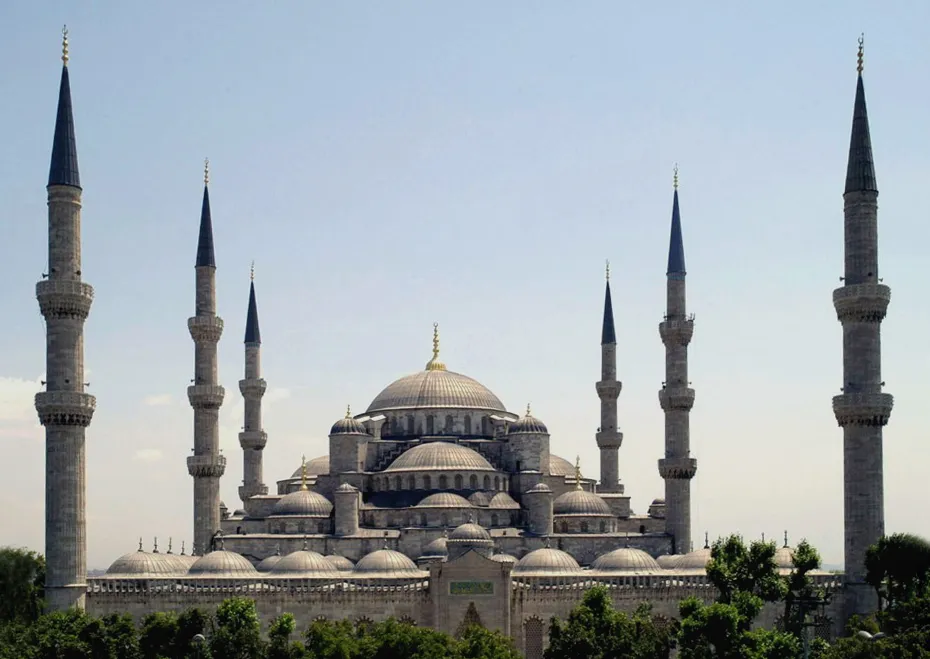
Istanbul's Blue Mosque gathers domes, minarets, Iznik tiles, and call-to-prayer atmosphere across from Hagia Sophia.
Trip fit
Is Sultan Ahmed Mosque right for your trip?
Best for
Can I realistically visit this?
Yes. The Sultan Ahmed Mosque is easy to visit as part of an Istanbul itinerary, but remember it is an active place of worship. Plan around prayer times, dress expectations, crowds, and nearby historic sites.
Physical difficulty
Easy
Planning complexity
Easy independent trip
Best time to go
Best: Apr-Jun, Sep-Oct. Good: Mar, Nov. Crowded / hot: Jul-Aug. Possible: Dec-Feb.
Perfect for
- Architecture lovers, first-time Istanbul visitors, cultural travellers, photographers, and families
Not ideal if
- Visitors unwilling to follow mosque etiquette or those looking for a quiet uncrowded monument at all hours
Compare with similar places
Sultan Ahmed Mosque vs Sheikh Zayed Grand Mosque vs Registan - Islamic architecture through tile, scale, symmetry, and public space.
Location
Where this place is
Sultan Ahmed Mosque is in Istanbul, Turkey / Middle East, useful for culture and architecture, photography and easy luxury trips before you choose routes, bases, and timing.
Istanbul, Turkey / Middle East
Open location on Google Maps opens in a new tabRegional orientation only. Open Google Maps for exact location.
Travel essentials
Before you book the flight
Do you need a visa for Turkey?
Start with the country visa-policy overview, then confirm current rules with an official source before booking.
Check visa requirements before booking
Start with the visa-policy overview, then confirm the current rules with an official embassy, consulate, or government source before booking non-refundable travel.
If using a visa service, compare processing times, fees, refund rules, and whether they cover your nationality.
Optional visa service comparison opens in a new tab- 1 EUR ≈ 53.94 TRY
- 1 USD ≈ 47.17 TRY
- 1 GBP ≈ 63.42 TRY
Exchange Rates Updated Daily. Last updated on 19/Jul/2026.

Big Mac® benchmark: approx. 255 TRY
Checked: January 2026. Prices vary by city and branch.
Approximate McDonald’s Big Mac® price where available. Prices vary by city, branch, tax, delivery channel, and date checked. This site is not affiliated with or endorsed by McDonald’s.
Source: The Economist Big Mac Index country-level data
Country-level Big Mac price from The Economist Big Mac Index
Prices Researched at May 2026
Where to stay
8+ rated stays for Sultan Ahmed Mosque
Booking.com opens with an 8+ guest-score filter for Sultan Ahmed Mosque, so you can compare current hotel photos, availability, prices, and recent traveler reviews before choosing a base.
8+ guest review score on Booking.com
Why it is beautiful
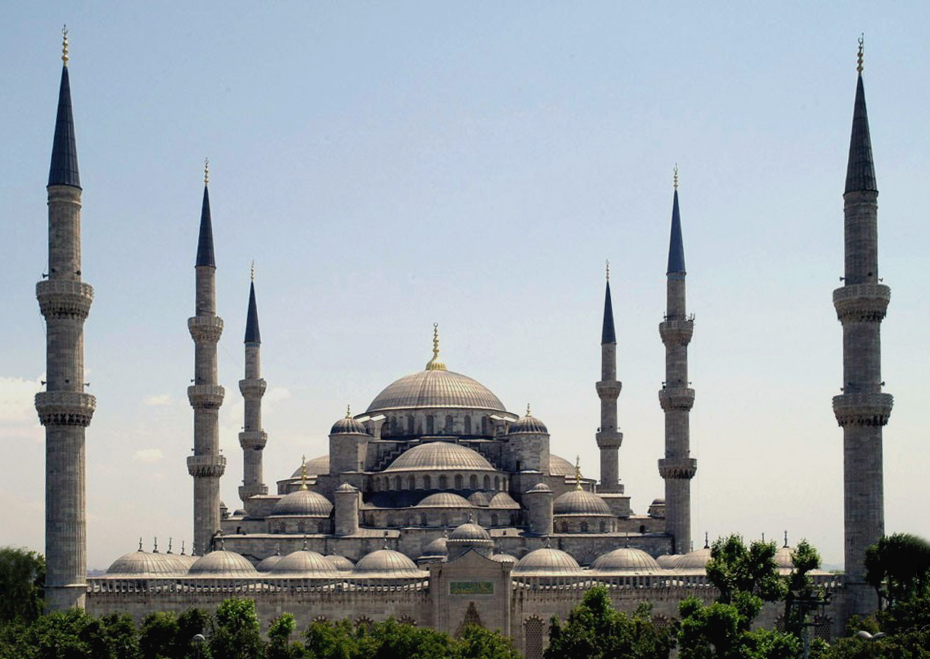
The Sultan Ahmed Mosque — the Blue Mosque — was completed in 1616 under Sultan Ahmed I and is the only Ottoman imperial mosque built with six minarets, a number that was considered a challenge to Mecca’s haram at the time. The exterior is a cascade of domes in descending tiers, each half-dome preparing the eye for the central dome; the interior is lined with over 20,000 hand-painted Iznik tiles in pale blue and white floral patterns, which give the mosque its popular name. It faces Hagia Sophia across the Hippodrome — a symbolic confrontation between the greatest church in Christendom and one of the greatest mosques of the Ottoman Empire, two buildings that represent 1,500 years of the same city’s history. At the call to prayer, when the muezzin broadcasts simultaneously from all six minarets, the courtyard fills with sound in a way that no other Istanbul experience replicates.
10 practical tips to help you decide
These tips are designed to help you decide whether the Sultan Ahmed Mosque fits your time, budget, comfort level, and travel style.
-
For architecture lovers, first-time Istanbul visitors, and cultural travellers — not those unwilling to follow mosque etiquette or looking for a crowd-free monument at all hours. The Sultan Ahmed Mosque is one of Istanbul’s most visited sites and is always busy in the tourist season. It is also an active place of worship closed to non-Muslim visitors during prayer times. Treating it as a sacred site rather than a tourist attraction gives the most rewarding experience — arrive early, be patient, and take time in the courtyard before entering.
-
April to June and September to October for Istanbul’s best walking weather and manageable crowds. Istanbul in spring and autumn is warm (18–26°C), long-dayed, and less congested than peak summer. May and June give excellent conditions for the Sultanahmet historic core. September is arguably the city’s best month — the Bosphorus is warm, the ferry crossings are smooth, and the major sites have shorter queues than July and August. December to February is cold and quiet — the mosque is moving in winter light with minimal visitors.
-
Fly into Istanbul Airport (IST) or Sabiha Gökçen (SAW) — Istanbul is extremely well-connected internationally. Istanbul Airport (IST) on the European side is one of the world’s busiest airports with direct connections from most major cities. Sabiha Gökçen (SAW) on the Asian side handles budget European carriers. From IST, the metro M11 connects to central Istanbul in 30–45 minutes. Havalimani–Gayrettepe metro runs to Taksim. No visa is required for EU, UK, and most Western nationals for stays up to 90 days — check the UK FCDO Turkey travel advice for current entry requirements.
-
Three to four days for Istanbul’s Sultanahmet core and a Bosphorus crossing; five days adds the Asian side and day trips. Three days covers the Sultan Ahmed Mosque, Hagia Sophia, Topkapi Palace, the Basilica Cistern, and a Grand Bazaar visit. A fourth day adds a Bosphorus boat trip (Dolmabahçe, Ortaköy, and the Rumeli Fortress from the water) and Beyoglu across the Golden Horn. Five days opens the Asian side — Üsküdar, Kadıköy market, and Beykoz — and possibly a day trip to Bursa or the Princes’ Islands.
-
Stay in Sultanahmet for the mosque on your doorstep; Beyoglu/Taksim for more city energy. Sultanahmet hotels sit within 5 minutes’ walk of the mosque, Hagia Sophia, and Topkapi. They tend to be boutique and mid-range, with rooftop terraces giving direct views of the domes. Beyoglu (across the Golden Horn) is livelier at night and closer to Bosphorus waterfront restaurants and modern Istanbul. Both areas are connected by tram; Sultanahmet wins for the ability to visit the mosque early morning before tour groups arrive.
-
Istanbul is good value by European standards — the mosque itself is free. Admission to the Sultan Ahmed Mosque is free (a donation is encouraged). Hagia Sophia entry is currently free for Muslim worshippers; non-Muslims pay a fee — check current status as this has changed. Topkapi Palace runs approximately TRY 700–900 (approximately €15–20). Mid-range hotels in Sultanahmet run €80–160 per night. A full sit-down restaurant meal with meze runs €20–40 per person. Budget roughly €80–130 per person per day including accommodation and food.
-
Check the FCDO advisory for Turkey — Istanbul is very safe for tourists with standard precautions. The UK FCDO Turkey travel advice advises against travel to specific southeastern regions near the Syrian and Iraqi borders — Istanbul and the western tourist coast have no restrictions. The advisory notes a general terrorism threat level and advises vigilance at tourist sites; Istanbul is safe by major global city standards and extremely well-visited. Pickpocketing around Sultanahmet and on the tram is the main tourist-area concern.
-
Arrive at 8:30am for the quietest interior and the best Iznik tile light. The mosque opens to non-Muslim visitors from 8:30am (outside of the 5 daily prayer times — typically 30-minute closures). Early morning gives quieter access to the interior, better photography light on the blue Iznik tiles (which are best in diffuse morning light rather than direct sun), and time to sit in the courtyard before the Sultanahmet crowds arrive. A prayer time will interrupt any visit — wait outside and re-enter after it concludes.
-
Hagia Sophia is directly opposite — the two buildings together define Sultanahmet. Hagia Sophia, completed in 537 AD by Emperor Justinian, was for a thousand years the largest cathedral in the world; it became a mosque in 1453, a museum in 1935, and a mosque again in 2020. The interior — the 31-metre dome, the remaining Byzantine mosaics, the semi-circular apses — is extraordinary. It is now an active mosque; non-Muslim visitors are admitted outside prayer times (with appropriate dress; women’s headscarves required). The Hippodrome between the two buildings was the Byzantine civic centre for a thousand years.
-
Take the Bosphorus ferry for the view that places both buildings in their city context. A public Bosphorus commuter ferry from Eminönü or Kabataş to Üsküdar on the Asian side (30 minutes, a few lira) gives a view of the Sultan Ahmed Mosque and Hagia Sophia from the water — two domed buildings flanked by minarets rising above the old seawall of Constantinople. The longer Bosphorus cruise (IST. ferry or tourist boats from Eminönü) runs north past Dolmabahçe Palace, the Ottoman summer palaces, and the Rumeli Hisarı fortress. See both buildings from the water on the way out and on foot on the way back.