
Asia / India
Taj Mahal
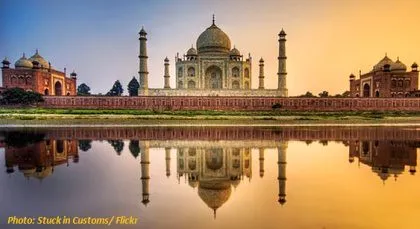
White marble, river mist, perfect symmetry, and changing light make the Taj Mahal feel both intimate and monumental.
Trip fit
Is Taj Mahal right for your trip?
Best for
Can I realistically visit this?
Yes. The Taj Mahal is one of the easiest great monuments to include in a North India itinerary, but timing matters. Plan for early starts, heat, crowds, ticketing, security rules, and whether you stay overnight in Agra.
Physical difficulty
Easy
Planning complexity
Easy independent trip / needs some planning
Best time to go
Best: Nov-Feb. Good: Mar, Oct. Very hot: Apr-Jun. Rainy: Jul-Sep.
Perfect for
- Architecture lovers, photographers, first-time India travellers, families, and visitors who want one of the world's most recognisable landmarks
Not ideal if
- Travellers who dislike crowds, early starts, heat, or strict site rules
Compare with similar places
Taj Mahal vs Registan vs Sheikh Zayed Grand Mosque - monumental architecture built around symmetry, light, and emotional impact.
Location
Where this place is
Taj Mahal is in India / Asia, useful for culture and architecture, photography and family-friendly natural beauty before you choose routes, bases, and timing.
India / Asia
Open location on Google Maps opens in a new tabRegional orientation only. Open Google Maps for exact location.
Travel essentials
Before you book the flight
Do you need a visa for India?
Start with the country visa-policy overview, then confirm current rules with an official source before booking.
Check visa requirements before booking
Start with the visa-policy overview, then confirm the current rules with an official embassy, consulate, or government source before booking non-refundable travel.
If using a visa service, compare processing times, fees, refund rules, and whether they cover your nationality.
Optional visa service comparison opens in a new tab- 1 EUR ≈ 110.2 INR
- 1 USD ≈ 96.38 INR
- 1 GBP ≈ 129.6 INR
Exchange Rates Updated Daily. Last updated on 19/Jul/2026.

Big Mac® benchmark: approx. 227 INR
Checked: January 2026. Prices vary by city and branch.
Approximate McDonald’s Big Mac® price where available. Prices vary by city, branch, tax, delivery channel, and date checked. This site is not affiliated with or endorsed by McDonald’s.
Source: The Economist Big Mac Index country-level data
Country-level Big Mac price from The Economist Big Mac Index
Prices Researched at May 2026
Where to stay
8+ rated stays for Taj Mahal
Booking.com opens with an 8+ guest-score filter for Taj Mahal, so you can compare current hotel photos, availability, prices, and recent traveler reviews before choosing a base.
8+ guest review score on Booking.com

Why it is beautiful
The Taj Mahal was built between 1632 and 1653 by Mughal Emperor Shah Jahan as a mausoleum for his wife Mumtaz Mahal, and its construction employed 20,000 artisans from across the Islamic world — Samarkand stonemasons, Bukharan tile-setters, Persian calligraphers. The white Makrana marble inlaid with semi-precious stones changes colour with the light: pearl-white at dawn, warm gold in the midday sun, pink-orange at dusk, and blue-grey in moonlight. The symmetry is absolute — the garden, the reflecting pool, the minarets, the gate — and yet the main dome and the tomb within it carry a quality of grief that the formal perfection somehow amplifies rather than conceals. The Yamuna River forms the northern boundary; from Mehtab Bagh across the river, the building is seen in a completely different relation to the sky. It is one of a small number of buildings in the world that consistently exceeds the expectations set by every photograph of it.
10 practical tips to help you decide
These tips are designed to help you decide whether the Taj Mahal fits your time, budget, comfort level, and travel style.
-
For architecture lovers, photographers, and first-time India travellers who want one of the world’s most recognisable landmarks — not those who dislike crowds, early starts, or strict site rules. The Taj Mahal is genuinely extraordinary and worth organising a trip around. It is also heavily visited — 7–8 million visitors per year — and site rules are strict. The experience is best managed with an early start, booked tickets, and realistic expectations about crowds outside of the first hour after opening.
-
October to March for cooler Agra mornings and the most atmospheric dawn light. Winter (November–February) gives cool mornings (8–18°C), Yamuna mist that softens the marble in early light, and manageable heat by midday. March is warm but still acceptable. April to June exceeds 40°C and the marble surface becomes too hot to stand on barefoot in some sections. July to September is monsoon — warm and humid, fewer tourists, and the marble looks freshly washed against green gardens, which some photographers prefer.
-
Take the train from Delhi to Agra — the Gatimaan Express is the fastest option. Agra Cantonment station is the main arrival point for Agra. The Gatimaan Express (Delhi Hazrat Nizamuddin to Agra Cantonment, 100 minutes) runs once daily and is the most convenient service — book at irctc.co.in in advance. The Shatabdi Express is slightly slower (2 hours) but has more departures. Taxis from Agra Cantonment to the Taj Mahal’s gates run approximately INR 200–400. India requires a tourist e-Visa for most Western nationals — apply at indianvisaonline.gov.in at least 96 hours before departure. Check the UK FCDO India travel advice for current requirements.
-
One full day in Agra is the minimum; stay overnight to get the dawn entry and evening visit. A day trip from Delhi gives the Taj Mahal but is rushed — 4 hours at the site with 6 hours total travel. Staying one night in Agra allows the 30-minute dawn opening walk (when the site has the fewest visitors and best light), a second visit in the late afternoon for different light, Agra Fort in the afternoon (Mughal military architecture with views of the Taj from the ramparts), and the optional Mehtab Bagh visit at sunset. Two nights in Agra is leisurely.
-
Stay within 1 km of the Taj Mahal’s southern gate for the most convenient access. Several guesthouses and mid-range hotels cluster in the Taj Ganj area immediately south of the monument’s main gate. Rooftop restaurants in this area give direct views of the domes — excellent at dusk when the light changes. Mid-range hotels farther from the site offer better quality for slightly more; book one with a rooftop or view room for the Taj sunset view. The ITC Mughal and Oberoi Amarvilas are the luxury tier, the Oberoi specifically positioned for a direct Taj view.
-
Agra is affordable — the main cost is the Taj entry fee for foreign nationals. Taj Mahal entry for foreign nationals is INR 1,100 (approximately USD 13–15). This includes a shoe cover (required at the mausoleum), water, and access to the main monument and garden. Agra Fort entry runs approximately INR 650. Budget hotels near Taj Ganj run INR 1,500–4,000 per night; mid-range properties INR 4,000–10,000. Meals at local restaurants run INR 200–600. Budget roughly USD 50–100 per person per day including accommodation, food, and entry fees.
-
Apply for an India e-Visa before departure — it is required for most Western nationals. UK, US, EU, Canadian, and Australian nationals can apply for an Indian e-Tourist Visa (eTV) at indianvisaonline.gov.in. Apply at least 4 days before arrival; the standard processing time is 72–96 hours. The e-Visa is USD 25 for most nationalities and is valid for 1 year with multiple entries. The UK FCDO India travel advice notes India is a generally safe destination with standard urban precautions; Agra’s tourist areas are well-frequented with minimal serious risk.
-
Arrive at the gates 15 minutes before opening for the best Taj Mahal experience. The main South Gate opens at sunrise (6am in winter, 5:30am in summer). Arriving before the gates open gives you the first 30–45 minutes with dramatically fewer visitors — the reflecting pool and main garden are almost quiet. By 8am, tour groups from Delhi start arriving and the experience changes significantly. Book tickets online at asi.nic.in or through the main gate’s ticketing counter (cash only) — online booking avoids queue time. Friday is closed to non-Muslims for prayers.
-
Security at the Taj Mahal is strict — check what is and is not allowed before arrival. Prohibited items include: food and drinks (except water in a clear bottle), tripods, mobile phone chargers, bags larger than a small day pack, and tobacco products. Photography is permitted throughout except inside the inner mausoleum chamber. Footwear is removed at the plinth — shoe covers are provided. The security check at the gate takes 10–15 minutes in peak season; factor this into your arrival timing.
-
See the Taj from Mehtab Bagh for the reverse view and from Agra Fort’s Musamman Burj for the imperial perspective. Mehtab Bagh is a garden on the north bank of the Yamuna, directly opposite the Taj, where Shah Jahan is said to have planned a second black marble mausoleum for himself. The view across the river gives the building in its river and sky setting without other monuments surrounding it. Agra Fort’s Musamman Burj tower is where Shah Jahan was imprisoned by his son Aurangzeb in his final years — he could see the Taj Mahal from the tower window until he died.