
Asia / China
Zhangye Danxia Landform
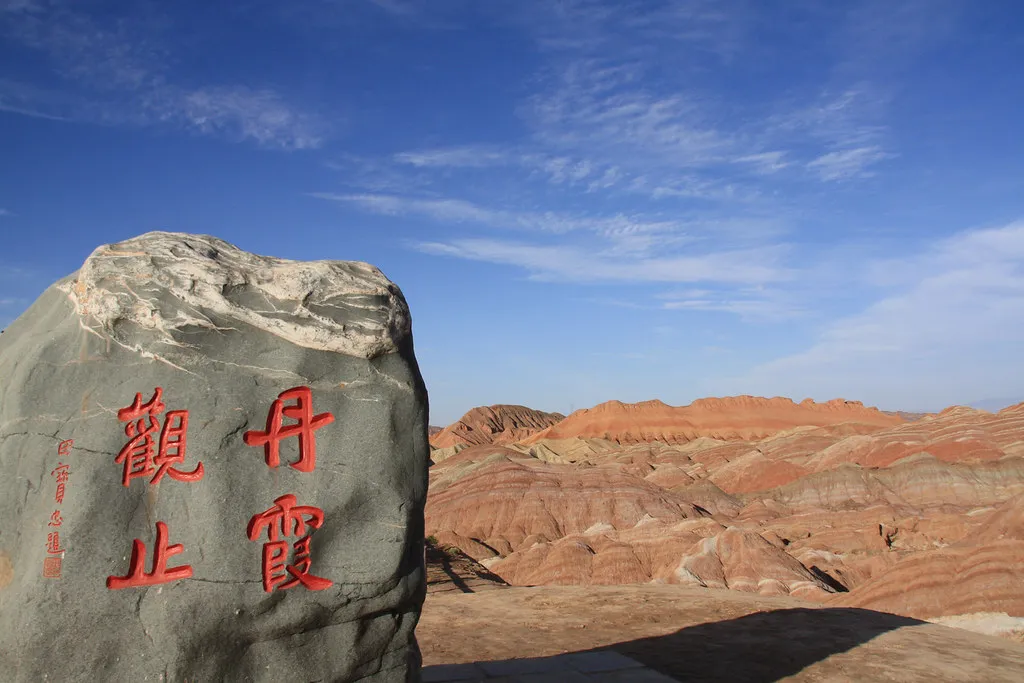
China's rainbow mountains ripple in bands of red, gold, and green, like geology painted at impossible scale.
Trip fit
Is Zhangye Danxia Landform right for your trip?
Best for
Can I realistically visit this?
Yes. Zhangye Danxia is relatively practical as part of a Gansu or Silk Road itinerary. The main planning questions are light, weather, transport, and whether you are combining it with other northwest China sites.
Physical difficulty
Easy
Planning complexity
Needs some planning
Best time to go
Best: Jun-Sep. Good: Apr-May, Oct. Cold / possible: Nov-Mar.
Perfect for
- Photographers, geology lovers, Silk Road travellers, and visitors who enjoy boardwalk viewpoints and colour-rich landscapes
Not ideal if
- Travellers expecting wilderness solitude or remote hiking
Compare with similar places
Zhangye Danxia vs Salar de Uyuni vs Yangykala Canyon - surreal landscapes built around colour, scale, and unusual geology.
Location
Where this place is
Zhangye Danxia Landform is in China / Asia, useful for dramatic landscapes, photography and road trips before you choose routes, bases, and timing.
China / Asia
Open location on Google Maps opens in a new tabRegional orientation only. Open Google Maps for exact location.
Travel essentials
Before you book the flight
Do you need a visa for China?
Start with the country visa-policy overview, then confirm current rules with an official source before booking.
Check visa requirements before booking
Start with the visa-policy overview, then confirm the current rules with an official embassy, consulate, or government source before booking non-refundable travel.
If using a visa service, compare processing times, fees, refund rules, and whether they cover your nationality.
Optional visa service comparison opens in a new tab- 1 EUR ≈ 7.76 CNY
- 1 USD ≈ 6.79 CNY
- 1 GBP ≈ 9.13 CNY
Exchange Rates Updated Daily. Last updated on 19/Jul/2026.

Big Mac® benchmark: approx. 25.5 CNY
Checked: January 2026. Prices vary by city and branch.
Approximate McDonald’s Big Mac® price where available. Prices vary by city, branch, tax, delivery channel, and date checked. This site is not affiliated with or endorsed by McDonald’s.
Source: The Economist Big Mac Index country-level data
Country-level Big Mac price from The Economist Big Mac Index
Prices Researched at May 2026
Where to stay
8+ rated stays for Zhangye Danxia Landform
Booking.com opens with an 8+ guest-score filter for Zhangye Danxia Landform, so you can compare current hotel photos, availability, prices, and recent traveler reviews before choosing a base.
8+ guest review score on Booking.com

Why it is beautiful
The Zhangye Danxia Landform in Gansu Province is a series of eroded sandstone hills coloured by iron oxides and minerals deposited in alternating sediment layers over 24 million years — deep red, burnt orange, pale yellow, dusty green, and white, in horizontal bands that follow the hill contours and change shade dramatically with the angle of the sun and the presence of moisture after rain.
The Chinese term danxia refers specifically to this type of reddish banded sandstone landform; Zhangye has the most vivid and largest-scale example. The colours are at their strongest in the 30 minutes after sunrise and the hour before sunset, and for a brief window after summer rain, when water saturates the surface minerals and the landscape looks almost artificially saturated. Boardwalk viewpoints overlook the hills from elevated positions that give the full panorama of banded geology rolling across the landscape.
10 practical tips to help you decide
These tips are designed to help you decide whether Zhangye Danxia fits your time, budget, comfort level, and travel style.
-
For photographers, geology lovers, and Silk Road travellers — not those expecting wilderness solitude or remote hiking. Zhangye Danxia is a well-managed scenic area with boardwalk viewpoints, shuttle buses, and controlled access. The landscape itself is extraordinary; the experience is structured. If you want empty desert geology without infrastructure, the Yangykala Canyon or Atacama offer that instead. Zhangye rewards visitors who time their visit for low-light photography and come prepared with a tripod and patience.
-
June to September for the strongest colours after summer rain; sunrise and sunset regardless of season. The colours are most intense in the wet summer months (July–August) when rain saturates the minerals — the day after rainfall gives the deepest, most saturated tones. September adds clearer skies and autumn light quality. April–May and October are good shoulder months with mild temperatures and fewer visitors. The colours are visible year-round; the intensity varies. Winter (November–March) is cold and dry; the landscape is still striking but colours are at their mildest.
-
Fly or take high-speed rail to Zhangye Ganzhou Airport (YZY) or Zhangye West HSR station. Zhangye connects by high-speed rail from Lanzhou (2.5 hours) and Jiayuguan (1 hour), both on the main Gansu Silk Road corridor. From Zhangye, the Danxia Geopark is 40 km south — taxis and buses run from the city centre. China’s visa requirements apply; most Western nationals need a standard tourist visa obtained from a Chinese embassy before departure. Confirm current rules at the Chinese Ministry of Foreign Affairs or via the UK FCDO China travel advice.
-
One full day for the Danxia viewpoints; two to three days for Zhangye and the wider Hexi Corridor. A single day gives sunrise at the viewpoints, a full morning across the boardwalks, and the afternoon light shift before sunset. Two days allows a more relaxed pace and a second visit for different light. A third day suits Zhangye’s Giant Buddha Temple (one of China’s largest reclining Buddha statues, in the city centre) and the Matisi Grottoes (Buddhist cave temples carved into a red cliff, 65 km from the city). Zhangye works well as a 1–2 night stop on a Gansu Silk Road itinerary between Jiayuguan and Lanzhou.
-
Stay in Zhangye city centre — 40 km from the geopark but the only practical base with a good range of accommodation. Zhangye’s city hotels (mid-range to business class) are the practical base. Taxis to the geopark run CNY 80–120 each way; some hotels organise group transfers. Arriving the evening before your main visit day allows an early start for sunrise — the gate opens at 6am in summer. There is a small guesthouse cluster near the geopark entrance for those wanting immediate proximity, but Zhangye city gives more accommodation quality and choice.
-
Zhangye Danxia is affordable — entry fees and accommodation are modest by international standards. The geopark entry fee runs approximately CNY 75–100 per adult (verify current price at the geopark ticketing office). Internal shuttle buses between viewpoints are included in most ticket types. Zhangye mid-range hotels run CNY 250–500 per night (approximately USD 35–70). Local Gansu cuisine (lamb noodles, hand-pulled pasta, cold skin noodles) is cheap and excellent. Budget roughly USD 60–100 per person per day.
-
China visa requirements apply — confirm current entry rules before booking. Most Western nationals need a standard Chinese tourist visa from a Chinese embassy or consulate before departure. China has visa-free transit arrangements for many nationalities through specific airports — Zhangye itself is not a direct international entry point, so most visitors arrive via Lanzhou or another Chinese hub with an existing visa. The UK FCDO China travel advice covers current entry requirements. Download offline maps (Google Maps does not function in China) and set up a VPN before departure if you need Western internet services.
-
Time your visit for the 30 minutes after sunrise or the 60 minutes before sunset — these are the only windows that justify the early start. Midday light flattens the colour bands; the same landscape that looks vivid at sunrise looks pale and washed out at noon. The most photographed viewpoints (Platform 2 and Platform 4) face different compass directions — Platform 4 faces west and catches the evening light best; Platform 2 faces east for morning. Ask your taxi driver for the current forecast and the viewpoint platform that will give the best light on your specific visit day.
-
Carry a wide-angle lens and a tripod for the sunrise and sunset windows. The boardwalk viewpoints are at elevation and give wide compositions across multiple hill ridges — a wide-angle or ultra-wide lens captures the layered scale better than a standard zoom. A tripod is useful for long exposures in the low-light morning and evening windows and for keeping compositions steady on the elevated platforms. The geopark does not restrict tripod use. Rain after hot weather intensifies the colours — if rain falls on the morning of your visit, go anyway: the saturated surface is the best photography condition.
-
Combine Zhangye with Jiayuguan and Dunhuang for a complete Gansu Silk Road circuit. Zhangye sits on the historic Silk Road corridor across Gansu Province. Jiayuguan (1 hour west by high-speed rail) has the westernmost gate of the Great Wall — a Ming-dynasty fortress in a desert setting unlike any Wall section near Beijing. Dunhuang (3 hours further west, with a flight or long train) has the Mogao Caves (world-class Buddhist cave paintings, UNESCO listed, advance booking essential) and the Singing Sand Dunes. A Lanzhou–Zhangye–Jiayuguan–Dunhuang itinerary of seven to ten days is one of China’s most distinctive overland routes.