
South America / Venezuela
Angel Falls
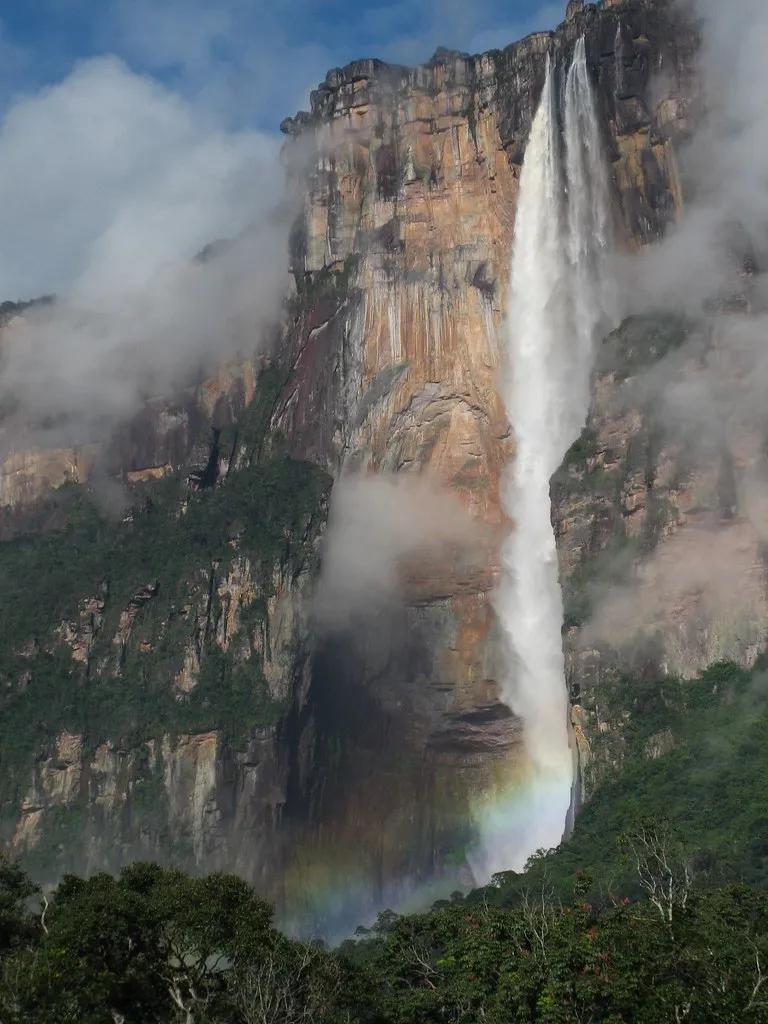
A 979-metre waterfall drops from a lost-world tepui into rainforest, reached by canoe through Canaima's storm-lit rivers.
Trip fit
Is Angel Falls right for your trip?
Best for
Can I realistically visit this?
Yes, but as a specialist trip. Angel Falls usually requires flights or river logistics, guides, seasonal water awareness, and careful checking of current safety, access, and operator reliability.
Physical difficulty
Moderate
Planning complexity
Complex / specialist trip
Best time to go
Best: Jun-Nov for stronger water. Good: May, Dec. Possible / lower water: Jan-Apr.
Perfect for
- Adventure travellers, waterfall lovers, photographers, and people willing to travel deep for a singular natural sight
Not ideal if
- Visitors who want easy logistics, luxury comfort, or a destination that does not require current safety checks
Compare with similar places
Angel Falls vs Victoria Falls vs Dettifoss - waterfall trips from remote jungle to accessible thunder.
Location
Where this place is
Angel Falls is in Venezuela / South America, useful for dramatic landscapes, photography and remote/adventurous travel before you choose routes, bases, and timing.
Venezuela / South America
Open location on Google Maps opens in a new tabRegional orientation only. Open Google Maps for exact location.
Travel essentials
Before you book the flight
Do you need a visa for Venezuela?
Start with the country visa-policy overview, then confirm current rules with an official source before booking.
Check visa requirements before booking
Start with the visa-policy overview, then confirm the current rules with an official embassy, consulate, or government source before booking non-refundable travel.
If using a visa service, compare processing times, fees, refund rules, and whether they cover your nationality.
Optional visa service comparison opens in a new tab- 1 EUR ≈ 842.7 VES
- 1 USD ≈ 736.9 VES
- 1 GBP ≈ 990.8 VES
Exchange Rates Updated Daily. Last updated on 19/Jul/2026.
Big Mac® benchmark: approx. 1370 VES
Checked: January 2026. Prices vary by city and branch.
Approximate McDonald’s Big Mac® price where available. Prices vary by city, branch, tax, delivery channel, and date checked. This site is not affiliated with or endorsed by McDonald’s.
Source: The Economist Big Mac Index country-level data
Country-level Big Mac price from The Economist Big Mac Index
Prices Researched at May 2026
Where to stay
8+ rated stays for Angel Falls
Booking.com opens with an 8+ guest-score filter for Angel Falls, so you can compare current hotel photos, availability, prices, and recent traveler reviews before choosing a base.
8+ guest review score on Booking.com

A country guide built around the world’s tallest uninterrupted waterfall and the tepuis of the Gran Sabana.
Why it is beautiful
Angel Falls (Salto Ángel) plunges 979 metres off the edge of Auyán-tepui — the vertical drop is so extreme that the water atomises before reaching the ground, trailing a permanent mist for hundreds of metres around the base. The setting amplifies the scale: Canaima National Park covers an area roughly the size of Belgium, its forest floor punctuated by flat-topped tepuis that look as if sections of ancient plateau were lifted clean out of the continent. You reach the base by a 4–6 hour canoe journey up storm-lit jungle rivers, which is half the experience.
10 practical tips to help you decide
These tips are designed to help you decide whether Angel Falls fits your time, budget, comfort level, and travel style.
-
Worth the journey for a singular natural sight — not for easy travel. Angel Falls suits adventure travellers, waterfall enthusiasts, and anyone willing to invest serious time and logistics for something that has no close equivalent. Skip it if you need reliable comfort, last-minute flexibility, or are uncomfortable with current Venezuela safety conditions — this is not a destination you can approach casually.
-
Come June to November. January to April and the falls may be a mist. The rainy season (June–November) runs the falls at full force. In the dry season (January–April) river levels drop so sharply that Angel Falls can thin to a trickle or disappear into haze. The sweet spot is late June, July, and August: the cataract is full, canoe journeys are still feasible, and skies clear between storms. November is reliable but often overcast.
-
Getting there requires two flights and a canoe — plan for a minimum of three days. The standard route is a flight from Caracas (CCS) or Ciudad Bolívar to Canaima airstrip, then a 4–6 hour motorised canoe up the Río Carrao and Churun to a camp near the base. Most operators bundle flights, canoe transfer, guide, and camp accommodation into a package. Allow at least two nights at Canaima; the canoe journey and morning hike to the viewpoint cannot be compressed into a day trip.
-
Three days minimum at Canaima; five-plus for the fuller experience. A two-night, three-day trip covers the canoe journey and the hike to Ratoncito viewpoint at the base — enough to absorb the scale. Two additional days allow a Canaima lagoon visit, better chances of clear morning light at the falls, and more time in the tepui landscape. A week opens the Gran Sabana extension or a start on the Roraima trek.
-
Base at a Canaima lodge — Caracas is only a transit point. Lodges near Canaima airstrip (Waku, Tapui, Bernal, Ucaima) are close to each other and organise all canoe departures. Hammock camps near the falls base are part of most overnight itineraries. For the falls visit, build accommodation around the Canaima lodges, not the capital — Caracas serves only as the entry and exit airport.
-
Bring USD cash. Cards are unreliable and the exchange rate strongly favours physical dollars. Venezuela’s banking infrastructure is unreliable for foreign cards. USD cash is the practical currency for hotels, guides, and independent transactions. Operators exchange dollars at parallel-market rates that are significantly better than the official rate. Bring more than you estimate and carry it securely across your person, not in one place.
-
Check Venezuela’s current safety situation and e-visa requirement before booking. Venezuela requires a tourist e-visa (currently free, multiple-entry, applied online — apply 2–4 weeks ahead and bring a printed copy). The overall safety situation in Venezuela is volatile: check your government’s current travel advisory before committing money. In Caracas, use airport-arranged hotel transfers and stay in Altamira or La Castellana.
-
Yellow fever vaccination is required for countries you may transit through. Yellow fever vaccination is required for entry to Colombia, Brazil, and Panama — all commonly used for onward travel after Venezuela. Get a printed International Certificate of Vaccination before departure. Airline check-in desks at Caracas and at connecting airports may ask to see it, not just border officials at the final destination.
-
Roraima is a natural extension — but needs its own separate 6–7 days. Roraima, the most iconic tepui and one of South America’s most distinctive treks, sits near Santa Elena de Uairén in the Gran Sabana. A Roraima trip requires 6–7 days with a guide and cannot be combined with the Angel Falls canoe trip in the same itinerary block. If you want both, plan a 12–14 day Venezuela trip with separate logistics for each.
-
English is not widely spoken outside hotels — basic Spanish changes the experience. Outside major Caracas hotels, English is uncommon across Venezuela. Canaima guides may have some English, but most operators and drivers communicate in Spanish only. Basic phrases covering travel days, food preferences, and directions make a significant practical difference. A brief Spanish refresher before departure is worth the effort.
When to go
June–November (rainy season): The falls run at full force — this is when most travellers come.
December–April (dry season): River levels drop and Angel Falls can thin to a mist. Tepui hiking on Roraima is more comfortable but Angel Falls boat access from Canaima village may be limited.
Sweet spot: Late June, July and August. The cataract is full, river journeys are still feasible, and skies clear between storms.
Getting there
The standard route is a flight from Caracas (CCS) or Ciudad Bolívar to Canaima airstrip, then a motorised dug-out canoe (curiara) journey of 4–6 hours up the Río Carrao and Río Churun to a camp near the base. A morning hike leads to the Ratoncito viewpoint. Most camps offer hammocks under thatch; lodges (Waku, Tapui, Bernal, Ucaima) are within walking distance of the airstrip.
There is no legal land crossing from Venezuela to Guyana — if you are combining countries, fly Caracas–Georgetown or route via Boa Vista in Brazil (Santa Elena de Uairén ↔ Lethem). Inside Venezuela the practical pairing is Caracas → Canaima → Ciudad Bolívar → Gran Sabana / Roraima trek.
Entry: the 2026 e-visa
Venezuela launched an electronic tourist visa in 2026. It is currently free, valid one year multiple-entry, and applied for online via the Ministry of Foreign Affairs portal. Key points from travellers who tested the system in April 2026:
Apply from a desktop browser — the mobile site is buggy.
Upload six documents: passport copy, ID photo on white, completed Word application form, confirmed flight reservation, confirmed hotel booking, and proof of funds (recent bank statement).
Approval times vary from a few hours to about ten days. Apply 2–4 weeks before travel.
Save the approval PDF and bring a printed copy — airline check-in desks ask to see it.
On the ground
Money: Bring USD cash. The black-market (parallel) rate is significantly better than the official rate; hotels and tour operators will exchange. Card use is unreliable.
SIM/Internet: Coverage in Canaima is patchy at best — plan to be offline. Pick up a Movistar or Digitel SIM in Caracas; an Airalo eSIM is a usable backup.
Safety: Caracas requires the usual big-city caution — use airport-arranged transfers and stay in Altamira or La Castellana (e.g. Renaissance Caracas La Castellana, JW Marriott). Canaima itself is calm; Gran Sabana road trips are best with a local driver.
Language: English is uncommon outside hotels. Basic Spanish helps enormously.
Two-week shape
Days 1–2 — Caracas: arrive, recover, light sightseeing.
Days 3–5 — Canaima and Angel Falls overnight river trip.
Days 6–7 — Ciudad Bolívar and Orinoco riverfront.
Days 8–13 — Gran Sabana and Roraima tepui trek from Santa Elena (6–7 days with guide).
Day 14 — Fly out via Caracas; if extending, hop overland to Boa Vista, Brazil.
Archive leads to verify manually
These older archive leads are useful starting points, but details should be re-checked independently before relying on them.
Roraima Air — Angel Falls overflights and Kaieteur Falls add-ons across the border in Guyana, based at Roraima Residence Inn.
Wilderness Explorers — longer Gran Sabana and cross-border programmes, responsive operator.
Lupine Travel and Travel the Guianas — multi-country South-American itineraries that wrap in Angel Falls.
Practical tips
Light hikers, fast-drying clothes, dry bag and 30L pack for the canoe trip. The river soaks everything.
Bring a head torch — camp lighting is minimal and the walk to Ratoncito viewpoint often starts before dawn.
Yellow fever vaccination is required by several neighbouring countries (Colombia, Brazil, Panama). Get a printed International Certificate.
Keep digital and paper copies of e-visa, passport and onward ticket. Airline staff in Bogotá and Panama still ask for them.