
Africa / Madagascar
Avenue of the Baobabs
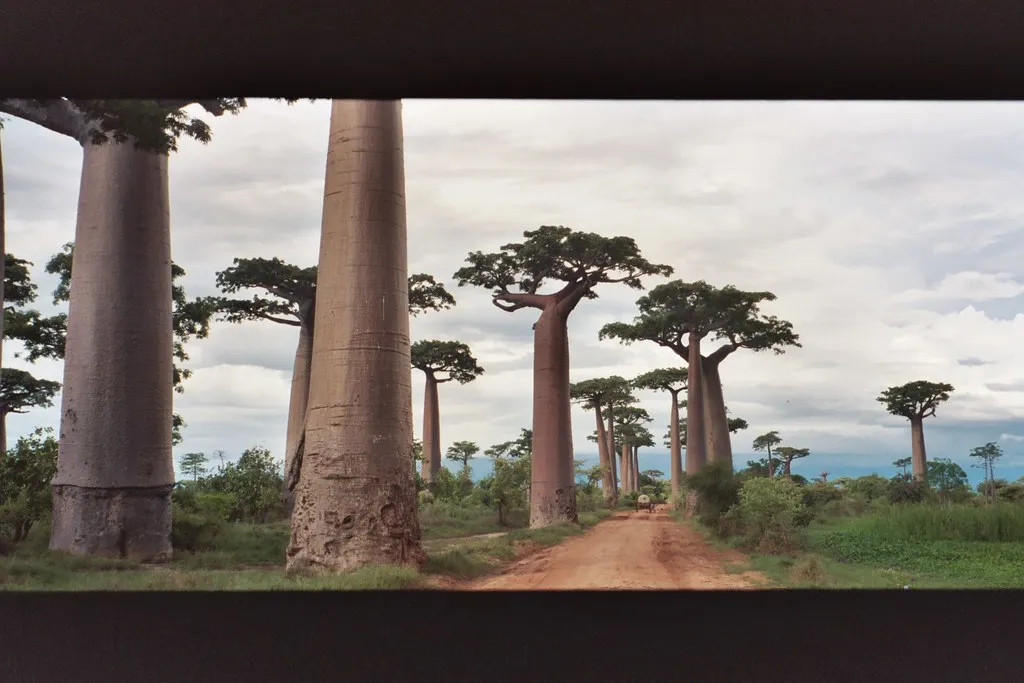
Ancient baobabs rise like living towers from a dusty Madagascar road, turning sunset into a prehistoric silhouette.
Trip fit
Is Avenue of the Baobabs right for your trip?
Best for
Can I realistically visit this?
Yes, but it takes planning because Madagascar travel can be slow. The avenue itself is accessible from Morondava, but the wider trip benefits from a driver, flexible timing, and realistic expectations about roads.
Physical difficulty
Easy
Planning complexity
Better with local operator / driver
Best time to go
Best: May-Oct. Good: Apr, Nov. Rainy / Possible: Dec-Mar.
Perfect for
- Photographers, nature travellers, Madagascar first-timers, and visitors who want a simple but unforgettable landscape image
Not ideal if
- Travellers who expect fast road travel, polished infrastructure, or a destination that fills many days by itself
Compare with similar places
Avenue of the Baobabs vs Etosha vs Ngorongoro - African nature icons, but with very different wildlife and road logistics.
Location
Where this place is
Avenue of the Baobabs is in Madagascar / Africa, useful for photography, dramatic landscapes and remote/adventurous travel before you choose routes, bases, and timing.
Madagascar / Africa
Open location on Google Maps opens in a new tabRegional orientation only. Open Google Maps for exact location.
Travel essentials
Before you book the flight
Do you need a visa for Madagascar?
Start with the country visa-policy overview, then confirm current rules with an official source before booking.
Check visa requirements before booking
Start with the visa-policy overview, then confirm the current rules with an official embassy, consulate, or government source before booking non-refundable travel.
If using a visa service, compare processing times, fees, refund rules, and whether they cover your nationality.
Optional visa service comparison opens in a new tab- 1 EUR ≈ 4910 MGA
- 1 USD ≈ 4294 MGA
- 1 GBP ≈ 5772 MGA
Exchange Rates Updated Daily. Last updated on 19/Jul/2026.

No McDonald’s benchmark available.
Use local café / fast-food meal prices instead.
Approximate McDonald’s Big Mac® price where available. Prices vary by city, branch, tax, delivery channel, and date checked. This site is not affiliated with or endorsed by McDonald’s.
Source: Countries with McDonald's restaurants reference
No reliable McDonald's/Big Mac benchmark found; likely no official McDonald's presence
Prices Researched at May 2026
Where to stay
8+ rated stays for Avenue of the Baobabs
Booking.com opens with an 8+ guest-score filter for Avenue of the Baobabs, so you can compare current hotel photos, availability, prices, and recent traveler reviews before choosing a base.
8+ guest review score on Booking.com

Why it is beautiful
The Avenue of the Baobabs is one of Madagascar’s great visual moments: a dusty road lined with towering Grandidier’s baobabs, their thick trunks rising out of rice fields and dry western landscape like pillars from a much older forest.
It is not a large site in the conventional sense — around 20–25 trees line the road, with more scattered in the surrounding landscape — but the concentration and scale of the trunks, especially in golden-hour light, creates an image that stays. The experience is simple: a road, ancient trees, local traffic moving past, and light that turns the whole scene prehistoric.
10 practical tips to help you decide
These tips are designed to help you decide whether the Avenue of the Baobabs fits your time, budget, comfort level, and travel style.
-
Worth the effort for photographers and those who want Madagascar’s endemic landscape — not worth a dedicated long-haul trip on its own. The avenue is a beautiful and distinctive landscape experience, but it is a road with 20-odd trees, not a full destination. It makes most sense as the centrepiece of a broader western Madagascar itinerary — combined with Kirindy Forest, the Tsingy, or Belo Tsiribihina river trip — rather than as the sole reason for a long journey. Skip it if you expect a multi-day activity hub.
-
May to October for passable roads. Wet season can be dramatic but slow. The dry season (May–October) gives the most reliable road travel in western Madagascar — the laterite roads that connect Morondava to the avenue are manageable in a standard vehicle. The wet season (December–March) brings dramatic skies and potential reflections in the flooded rice paddies, but road conditions deteriorate and travel times can double. April and November are transition months — check conditions locally before committing.
-
Base in Morondava and hire a local driver for the 45-minute transfer. The Avenue of the Baobabs is near Morondava on Madagascar’s west coast, along the road toward Belo Tsiribihina. You do not need an expensive guided tour to visit — a simple local driver hire or tuk-tuk from Morondava is enough for the avenue itself. Getting to Morondava is the harder question: domestic flights are available but costly and unreliable; overland travel is cheaper but slow. Build slack into any Madagascar itinerary — connections rarely run to schedule.
-
Half a day is enough for the avenue; stay two nights in Morondava to add Kirindy. The avenue visit itself takes 1–3 hours depending on whether you go for sunrise, sunset, or both. As a standalone stop it does not fill a day. Morondava with two nights gives time for the avenue, the nearby Baobab Amoureux (two intertwined trees, a half-hour detour), and a morning or full day in Kirindy Forest for fossa and wildlife.
-
Morondava has simple hotels, not luxury — set expectations accordingly. Morondava is a small west-coast town with functional guesthouses and a handful of mid-range hotels. Do not expect reliable air conditioning, strong Wi-Fi, or international hotel standards. The best options are local guesthouses with direct access to driver hire. The town is the practical base — it is not the destination.
-
The domestic flight to Morondava is the main cost. The visit itself is cheap. A simple driver transfer from Morondava costs very little. Madagascar’s cost challenge is the domestic flight network (Air Madagascar and alternatives): routes can be expensive, seats limited, and cancellations common. Budget the domestic air travel first and work backwards from there. Overland alternatives exist but add significant time.
-
Check Madagascar’s current entry requirements and road conditions before booking. Madagascar requires a visa — available on arrival at Antananarivo for many nationalities, or via an e-visa portal in advance. Check current entry requirements through your government’s travel advisory before booking. Road conditions in western Madagascar vary significantly by season and year; local operators and recent traveller reports are the most reliable current source.
-
Go at sunrise, not only at sunset. Sunset is the classic and most photographed time at the avenue — the trees silhouette dramatically against an orange sky. But it is also the busiest. Sunrise gives softer, cooler light, fewer visitors (often none), and better atmospheric photography. If you can manage two visits, sunset for the spectacle and sunrise for the quiet are genuinely different experiences.
-
The avenue is still a working road — treat it like one. Zebu carts, cyclists, and villagers move along the road throughout the day and are part of what makes the scene alive rather than a sealed tourist site. Be respectful with photography of local people, especially children: asking before pointing a camera is both courteous and practically useful — children who expect money for photos become persistent if you shoot without asking.
-
Add the Belo Tsiribihina river trip if you have the time. The road north from Morondava leads to Belo Tsiribihina, from which pirogue river trips run toward the Tsingy de Bemaraha — one of Madagascar’s most extraordinary landscapes. The combination of avenue, Kirindy, and a Tsingy approach via river is the classic western Madagascar circuit and transforms a half-day detour into a full week of travel with genuine variety.