
Africa / Morocco
Chefchaouen
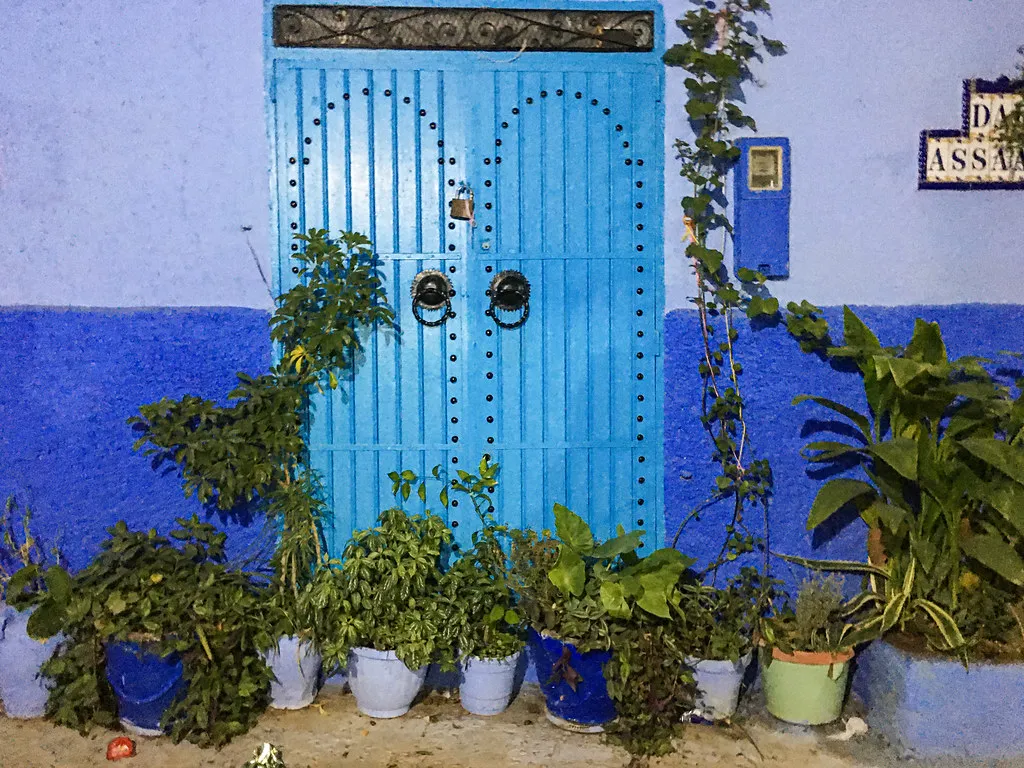
Blue lanes climb through the Rif Mountains, where morning light, tiled doorways, and quiet rooftops make Morocco feel hushed.
Trip fit
Is Chefchaouen right for your trip?
Best for
Can I realistically visit this?
Yes. Chefchaouen is a practical northern Morocco stop, but it works best when you allow time for slow wandering, light, hills, and nearby mountain scenery rather than treating it as only a blue-wall photo stop.
Physical difficulty
Easy to moderate because of hills and steps
Planning complexity
Easy independent trip / needs some planning
Best time to go
Best: Apr-May, Sep-Oct. Good: Mar, Nov. Very hot / crowded: Jun-Aug. Possible: Dec-Feb.
Perfect for
- Photographers, Morocco first-timers, slow walkers, architecture lovers, and travellers combining cities with Rif mountain scenery
Not ideal if
- Visitors expecting solitude, a large city, or a destination that is only about one viewpoint
Compare with similar places
Chefchaouen vs Chinguetti vs Santorini - strong colour, old streets, and atmosphere, but very different landscapes.
Location
Where this place is
Chefchaouen is in Morocco / Africa, useful for culture and architecture, photography and family-friendly natural beauty before you choose routes, bases, and timing.
Morocco / Africa
Open location on Google Maps opens in a new tabRegional orientation only. Open Google Maps for exact location.
Travel essentials
Before you book the flight
Do you need a visa for Morocco?
Start with the country visa-policy overview, then confirm current rules with an official source before booking.
Check visa requirements before booking
Start with the visa-policy overview, then confirm the current rules with an official embassy, consulate, or government source before booking non-refundable travel.
If using a visa service, compare processing times, fees, refund rules, and whether they cover your nationality.
Optional visa service comparison opens in a new tab- 1 EUR ≈ 10.67 MAD
- 1 USD ≈ 9.33 MAD
- 1 GBP ≈ 12.54 MAD
Exchange Rates Updated Daily. Last updated on 19/Jul/2026.
No McDonald’s benchmark available.
Use local café / fast-food meal prices instead.
Approximate McDonald’s Big Mac® price where available. Prices vary by city, branch, tax, delivery channel, and date checked. This site is not affiliated with or endorsed by McDonald’s.
Source: Countries with McDonald's restaurants reference
McDonald's presence likely, but no current Big Mac Index row found; needs local menu/app check
Prices Researched at May 2026
Where to stay
8+ rated stays for Chefchaouen
Booking.com opens with an 8+ guest-score filter for Chefchaouen, so you can compare current hotel photos, availability, prices, and recent traveler reviews before choosing a base.
8+ guest review score on Booking.com

Why it is beautiful
Chefchaouen is a compact Moroccan medina painted almost entirely in shades of blue and white, set in a sheltered hollow of the Rif Mountains a few hours south of Tangier. The painted walls, tiled doorways, and stepped alleys create a visual coherence unlike any other Moroccan city — blues ranging from pale chalky washes to deep indigo in the same lane. Morning light hits the alleys before the day-trip crowds arrive, and the view from the Spanish Mosque above town looks back over the whole painted hillside. The surrounding mountains give it a cooler, quieter energy than Marrakesh or Fez.
10 practical tips to help you decide
These tips are designed to help you decide whether Chefchaouen fits your time, budget, comfort level, and travel style.
-
For photographers, architecture lovers, and Morocco first-timers — not if you want a major city or genuine solitude. Chefchaouen suits travellers who want a gentle, photogenic medina with mountain air and slow wandering. It works well as a first Moroccan medina experience precisely because it is smaller and less overwhelming than Fez or Marrakesh. Skip it if you expect a large city’s energy, complete solitude, or a destination packed with historical monuments — the town’s primary offering is atmosphere, not a long sights checklist.
-
March to May and September to November for the best conditions. Avoid June to August. Spring and autumn bring mild temperatures (15–25°C), manageable crowds, and the best light on the blue walls. June to August is hot — often above 35°C in the narrow alleys — and Instagram tourism peaks sharply. December to February is cold but very quiet; wet days are possible, but accommodation prices drop and the lanes feel like a different town without the tour groups.
-
No train to Chefchaouen — take CTM bus from Tangier, Tetouan, or Fez. Chefchaouen has no rail connection. CTM (Morocco’s most reliable long-distance bus company) runs services from Tangier (around 3–4 hours), Tetouan (1.5 hours), and Fez (4–5 hours). Many European visitors arrive via the Tarifa–Tangier Med ferry from Spain, then bus south. CTM timetables and booking are at ctm.ma. Grand taxis from Tetouan are a faster alternative for small groups.
-
Two nights is the minimum for a relaxed visit. Day trips from Fez are too rushed. One night leaves you with only a single early morning before departing. Two nights gives you an evening walk to the Spanish Mosque, the medina before crowds arrive, and time for a short Rif hike without hurrying. Day-trip packages from Fez (a common offer) involve 8–9 hours of total travel for only 2–3 hours in the town — not enough to feel the place.
-
Stay inside the medina, not outside it. Accept the luggage climb. Guesthouses and small riads within the medina lanes give you early-morning access before day-trippers arrive and quiet evenings after they leave. Many lanes are stepped and car-free, so carry rather than wheel your luggage. Book accommodation with precise lane directions included — the medina is easy to navigate once oriented, but addresses are approximate. Central lanes around Plaza Uta el-Hammam are slightly pricier; alleys a few minutes back are quieter and better value.
-
Chefchaouen is affordable — one of Morocco’s better-value overnight stops. Private rooms in medina guesthouses run roughly €15–40 per night; simple Moroccan meals at local restaurants cost €3–8. Avoid restaurants directly on the main square, where prices are consistently higher for the same food available two alleys away. Budget around €30–50 per person per day including accommodation, food, and local transport. The main cost variable is how you arrive — CTM bus is cheap, private transfers are not.
-
No visa for most Western passports — but read your government’s Morocco advisory for the Rif region. EU, UK, and US passport holders do not need a visa for Morocco (90 days on arrival). Check current entry requirements at your government’s travel page before flying. The UK FCDO Morocco travel advice notes that cannabis is widely available in the Rif region but remains illegal in Morocco — possession carries real legal risk regardless of how openly it is sold. Petty theft in tourist areas is the more common concern; carry minimal valuables in busy lanes.
-
Go before 9am for the blue lanes — midday light is harsh and the lanes fill with visitors. The narrow alleys catch the best photography light in the hour after dawn: long shadows, deep colours, quiet streets. By mid-morning, day-trip groups arrive and the most photographed spots become crowded. Evening is a second good window — after day-trippers leave around 5–6pm, the lanes go quiet again and warm late-afternoon light catches the walls before dark.
-
Walk up to the Spanish Mosque for the panoramic view over the blue town. The Spanish Mosque sits on the hillside above the medina and gives the classic elevated view of Chefchaouen’s blue rooftops against the Rif mountains. The walk takes 20–30 minutes from Plaza Uta el-Hammam on a clear path. Go at dusk when the town turns golden below, then watch the light shift as the medina lamps come on. There is no entry fee and the path is clearly trodden.
-
Combine Chefchaouen with a wider northern Morocco route — it works poorly as a standalone long-haul destination. Chefchaouen makes most sense as part of a northern Morocco circuit: Tangier (2 nights) → Chefchaouen (2 nights) → Fez (3 nights) is the most-travelled sequence and links by efficient CTM connections. If flying into Morocco, Fez (FEZ) gives the smoothest entry point for this loop in reverse. Combining the three cities gives very different Moroccan experiences — port city, mountain medina, imperial city — without excessive backtracking.