
Africa / Namibia
Etosha
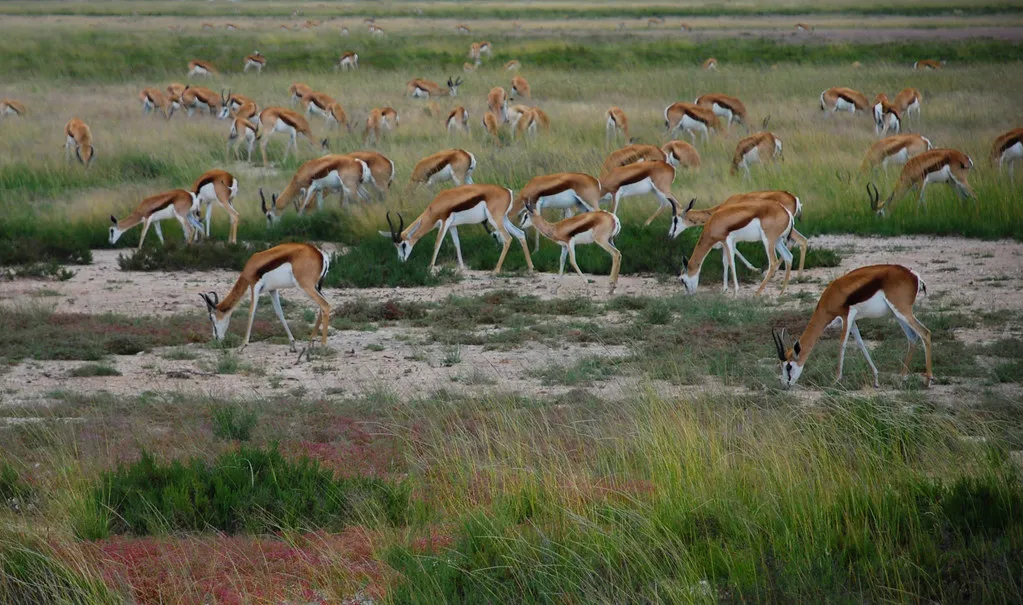
Wildlife gathers at waterholes on the edge of a vast white pan, turning Namibia's dry season into theatre.
Trip fit
Is Etosha right for your trip?
Best for
Can I realistically visit this?
Yes. Etosha is one of Africa's more practical safari choices for self-drive travellers, but you still need your own vehicle or an organised safari. Book rest camps early and understand park distances before choosing a route.
Physical difficulty
Easy
Planning complexity
Needs some planning
Best time to go
Best: Jun-Oct. Good: May, Nov. Rainy / Possible: Dec-Apr.
Perfect for
- First-time safari travellers, photographers, families, self-drivers, and wildlife-focused road trips
Not ideal if
- Travellers wanting lush scenery year-round or a fully guided luxury safari only
Compare with similar places
Etosha vs Kruger vs Ngorongoro - classic African wildlife trips with different levels of independence, density, and landscape.
Location
Where this place is
Etosha is in Namibia / Africa, useful for wildlife, first-time africa trips and photography before you choose routes, bases, and timing.
Namibia / Africa
Open location on Google Maps opens in a new tabRegional orientation only. Open Google Maps for exact location.
Travel essentials
Before you book the flight
Do you need a visa for Namibia?
Start with the country visa-policy overview, then confirm current rules with an official source before booking.
Check visa requirements before booking
Start with the visa-policy overview, then confirm the current rules with an official embassy, consulate, or government source before booking non-refundable travel.
If using a visa service, compare processing times, fees, refund rules, and whether they cover your nationality.
Optional visa service comparison opens in a new tab- 1 EUR ≈ 18.87 NAD
- 1 USD ≈ 16.50 NAD
- 1 GBP ≈ 22.19 NAD
Exchange Rates Updated Daily. Last updated on 19/Jul/2026.

No McDonald’s benchmark available.
Use local café / fast-food meal prices instead.
Approximate McDonald’s Big Mac® price where available. Prices vary by city, branch, tax, delivery channel, and date checked. This site is not affiliated with or endorsed by McDonald’s.
Source: Countries with McDonald's restaurants reference
No reliable McDonald's/Big Mac benchmark found; likely no official McDonald's presence
Prices Researched at May 2026
Where to stay
8+ rated stays for Etosha
Booking.com opens with an 8+ guest-score filter for Etosha, so you can compare current hotel photos, availability, prices, and recent traveler reviews before choosing a base.
8+ guest review score on Booking.com

Why it is beautiful
Etosha is beautiful because it is stark rather than lush: a vast white salt pan edging the horizon, low dry bush, and waterholes that turn wildlife observation into something almost theatrical. Elephants, lions, rhinos, giraffes, zebra, and springbok appear against an almost minimal backdrop where every movement stands out. The park works on the principle of waiting rather than driving — sitting at a waterhole at dusk as the light changes and animals arrive one by one is the defining Etosha experience. For self-drive travellers, it is one of the most accessible and rewarding safari parks in Africa.
10 practical tips to help you decide
These tips are designed to help you decide whether Etosha fits your time, budget, comfort level, and travel style.
-
For self-drive safari travellers, wildlife photographers, and families wanting a practical first African safari — not those who need lush vegetation or East African predator density. Etosha is the right choice for travellers who want elephants, lions, rhinos, and giraffes in a landscape they can navigate independently. Skip it if you expect Maasai Mara-style grassland and predator density: Etosha is dry bush and pan. Its advantage is that self-drive works extremely well, the sightings can be extraordinary, and the waterholes guarantee something to watch.
-
June to October for peak wildlife. July to September for the best dry-season waterhole concentration. The dry season is when animals gather at waterholes — the park’s signature experience. July to September gives the highest waterhole activity and the most reliable elephant and rhino sightings. October can reach 40°C+ but remains excellent for wildlife. November to April is the green season: more water disperses animals across the park, sightings become less predictable, but migratory birds arrive and the landscape looks entirely different.
-
Rent a 2WD car in Windhoek and drive yourself — Etosha is Africa’s most practical self-drive park. Fly into Windhoek (WDH) and drive north to the Andersson Gate entry point (about 4.5 hours on the B1). Most of Etosha’s main park roads are manageable in a standard 2WD sedan during the dry season. A higher-clearance vehicle gives more flexibility on minor tracks. Book your rental well ahead for July–September — vehicles are scarce during peak season. Namibia is visa-free for most Western nationalities (90 days on arrival).
-
Three nights minimum; spread across two rest camps for the best coverage. Two nights gives one full day in the park — too rushed. Three nights allows a day near Okaukuejo (the western camp, known for rhino at the floodlit waterhole), a day toward Halali in the middle, and time to explore without over-driving. Four nights covers the eastern Namutoni area. A common mistake is spending too much time driving and too little time waiting at waterholes.
-
Book NWR rest camps months in advance for peak season. Okaukuejo, Halali, and Namutoni are managed by Namibia Wildlife Resorts (NWR) and range from campsites to simple chalets. In July and August, chalets fill months ahead. Book directly at nwr.com.na rather than through third-party resellers. The Okaukuejo floodlit waterhole is productive after dark — rhinos drink here regularly in season. Private lodges outside the gates (Mushara, Anderssons at Etosha) are higher-end alternatives if NWR accommodation is full.
-
Park entry (NAD 280 per foreign adult per day, from April 2026) plus vehicle and accommodation fees apply. Verify the current fee structure at the NWR website or Namibia Tourism before departure — fees changed in April 2026 and may change again. A 3-day self-drive visit for two people in a simple chalet typically runs NAD 3,000–5,000 total (roughly USD 150–250) including entry, accommodation, and vehicle. Self-catering from camp shops reduces food costs significantly. Etosha is one of Africa’s better-value safari options; the international flight and car rental are the main cost drivers.
-
Malaria prophylaxis is recommended for Etosha and northern Namibia — get current advice before travel. Etosha sits in Namibia’s malaria zone, and prophylaxis is generally recommended, particularly during and after the wet season. Consult a travel medicine clinic or your GP at least 4–6 weeks before departure. The UK FCDO notes a malaria risk in northern Namibia including Etosha. Mosquito repellent and long sleeves at dusk are standard precautions year-round.
-
Book a guided night drive — self-driving after dark is not permitted. Park gates close at dusk and self-drivers must be inside their camp by sundown. The only way to see nocturnal wildlife — aardwolf, brown hyena, porcupine, and predators on the move — is through guided night drives run from each camp daily. They cost approximately NAD 400–600 per person and are one of Etosha’s genuinely distinctive experiences. Book through your camp office on arrival, not in advance.
-
Sit at waterholes rather than driving constantly — patience is the Etosha skill. Etosha rewards waiting over covering distance. Pick a productive waterhole — your rest camp’s own waterhole is a natural anchor; Chudob, Rietfontein, and Klein Namutoni are other reliable sites — and sit for at least 60–90 minutes. Animals rarely arrive simultaneously; sequences of elephants, zebra, and predators at the water are the experiences that stay. Driving past 10 waterholes in a day produces far fewer memorable moments than waiting at two.
-
Combine Etosha with a wider Namibia road trip for one of Africa’s best self-drive experiences. Etosha is best understood as part of a Namibia loop rather than a standalone destination. A classic 10–14 day circuit: Windhoek → Sossusvlei (red dunes of the Namib) → Swakopmund (Atlantic coast) → Damaraland (desert-adapted elephant) → Etosha → Windhoek. The drives are long but the landscapes are extraordinary, most roads are sealed or good gravel, and the circuit is doable in a standard 2WD rental for the majority of the route.