Africa / Cape Town, South Africa
Table Mountain
Cape Town unfolds below a flat-topped mountain of cliffs, cloud, fynbos, ocean, and sunset city views.
Trip fit
Is Table Mountain right for your trip?
Best for
Can I realistically visit this?
Yes. Table Mountain is very accessible from central Cape Town, but weather controls the experience. Cableway status, summit visibility, wind, heat, cloud, and hiking conditions can change quickly, so keep timing flexible.
Physical difficulty
Easy by cableway, strenuous on foot
Planning complexity
Easy independent trip / check weather and cableway closures
Best time to go
Best: Oct-Apr. Good: May, Sep. Rainy / possible: Jun-Aug.
Perfect for
- Cape Town visitors, hikers, photographers, and travellers wanting big city-and-ocean views in one outing.
Not ideal if
- Travellers uncomfortable with sudden weather changes or heights on exposed paths.
Compare with similar places
Table Mountain vs Fitz Roy vs Olympic National Park - mountain landscapes shaped by weather where access is part of the plan.
Location
Where this place is
Above Cape Town, useful for dramatic city-and-ocean views, short hikes and one of the world's most recognisable mountain skylines.
Nearby
- Cape Town city bowlcity base / below the mountain
- Table Mountain cablewaymain access / classic route up
- Lion's Headnearby hike / nearby mountain
Cape Town, South Africa
Open location on Google Maps opens in a new tabRegional orientation only. Open Google Maps for exact location.
Travel essentials
Before you book the flight
Do you need a visa for South Africa?
Start with the country visa-policy overview, then confirm current rules with an official source before booking.
Check visa requirements before booking
Start with the visa-policy overview, then confirm the current rules with an official embassy, consulate, or government source before booking non-refundable travel.
If using a visa service, compare processing times, fees, refund rules, and whether they cover your nationality.
Optional visa service comparison opens in a new tab- 1 EUR ≈ 18.87 ZAR
- 1 USD ≈ 16.50 ZAR
- 1 GBP ≈ 22.19 ZAR
Exchange Rates Updated Daily. Last updated on 19/Jul/2026.
Big Mac® benchmark: approx. 54.9 ZAR
Checked: January 2026. Prices vary by city and branch.
Approximate McDonald’s Big Mac® price where available. Prices vary by city, branch, tax, delivery channel, and date checked. This site is not affiliated with or endorsed by McDonald’s.
Source: The Economist Big Mac Index country-level data
Country-level Big Mac price from The Economist Big Mac Index
Prices Researched at May 2026
Where to stay
8+ rated stays for Table Mountain
Booking.com opens with an 8+ guest-score filter for Table Mountain, so you can compare current hotel photos, availability, prices, and recent traveler reviews before choosing a base.
8+ guest review score on Booking.com
Why it is beautiful
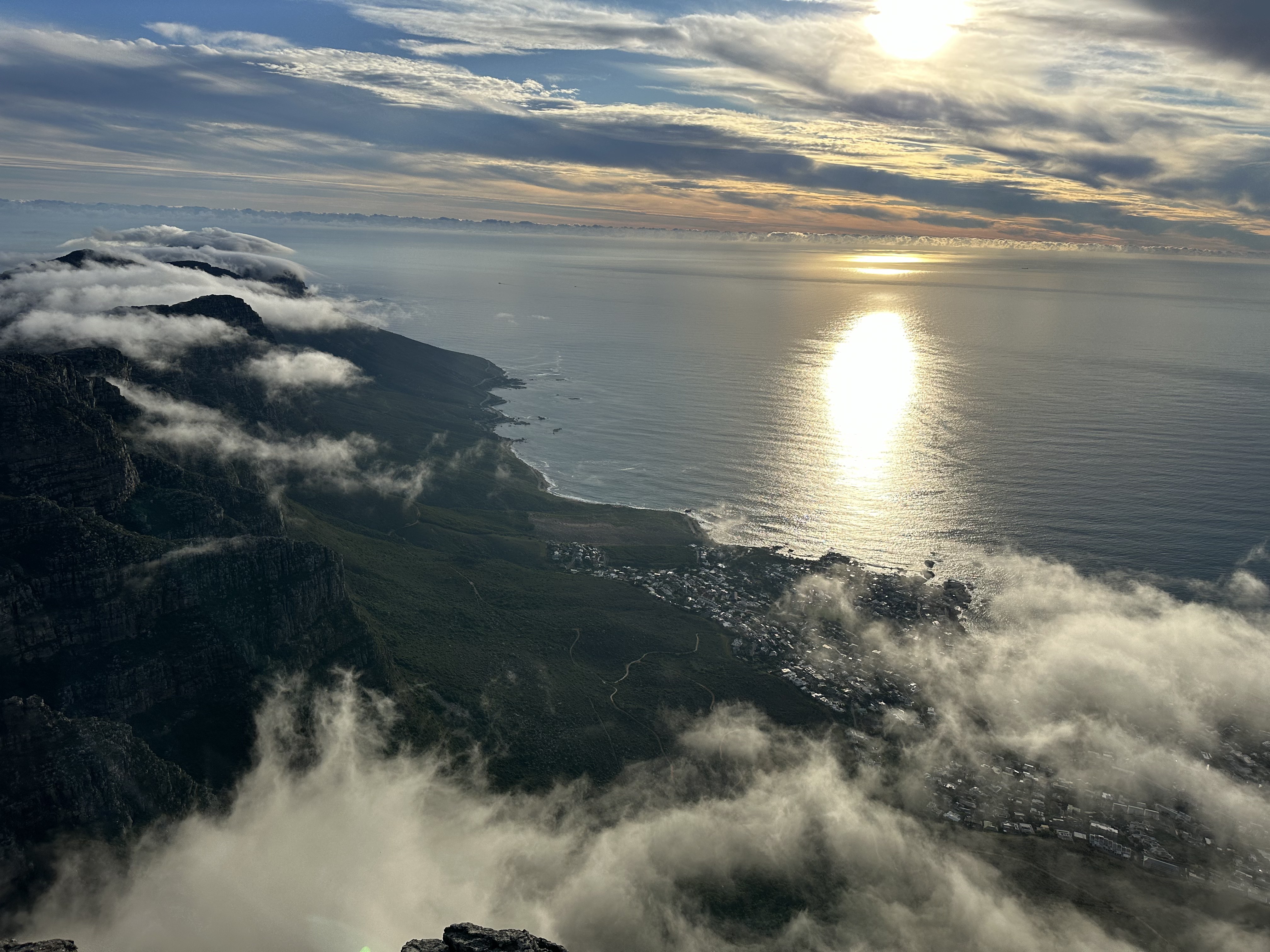
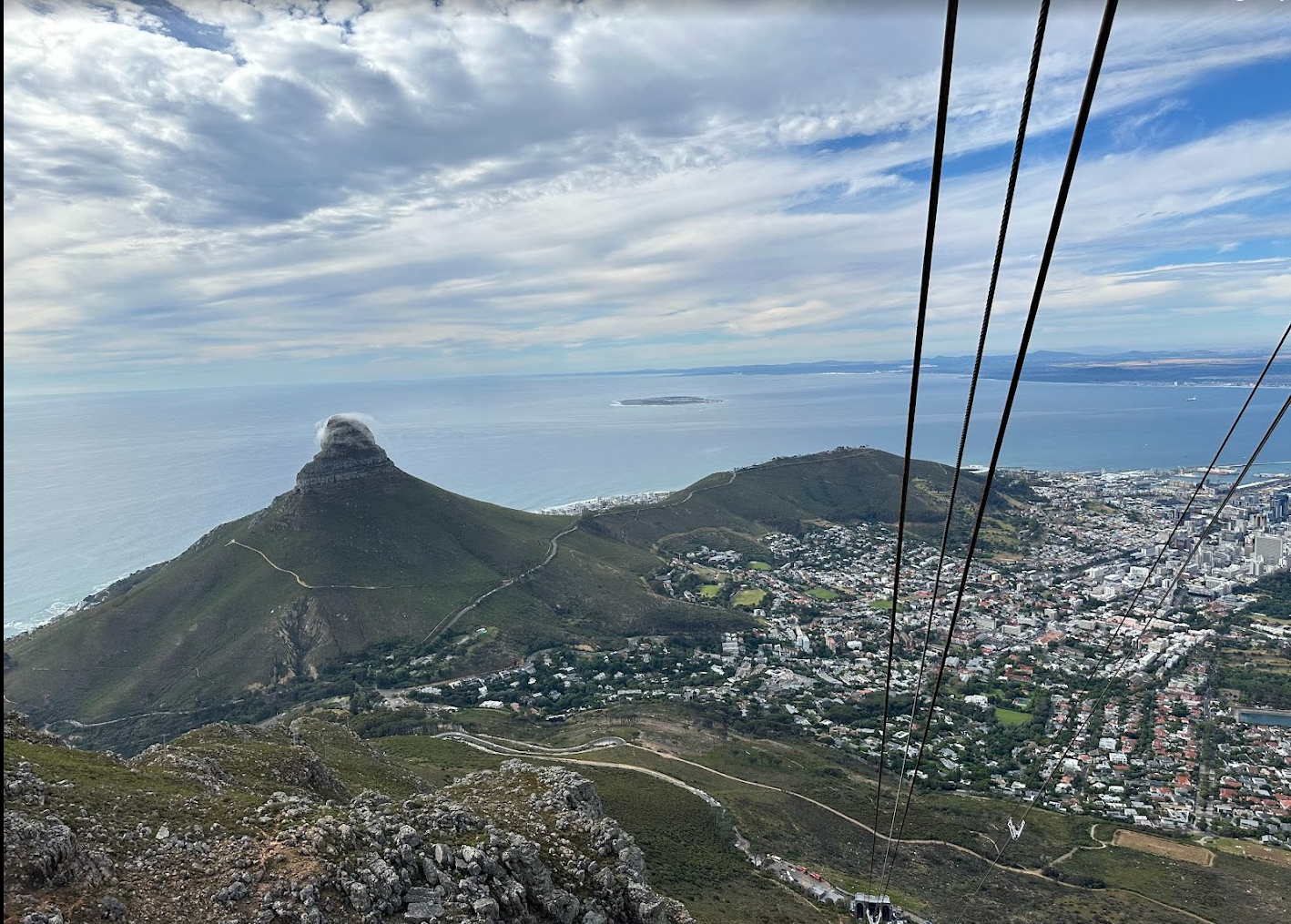
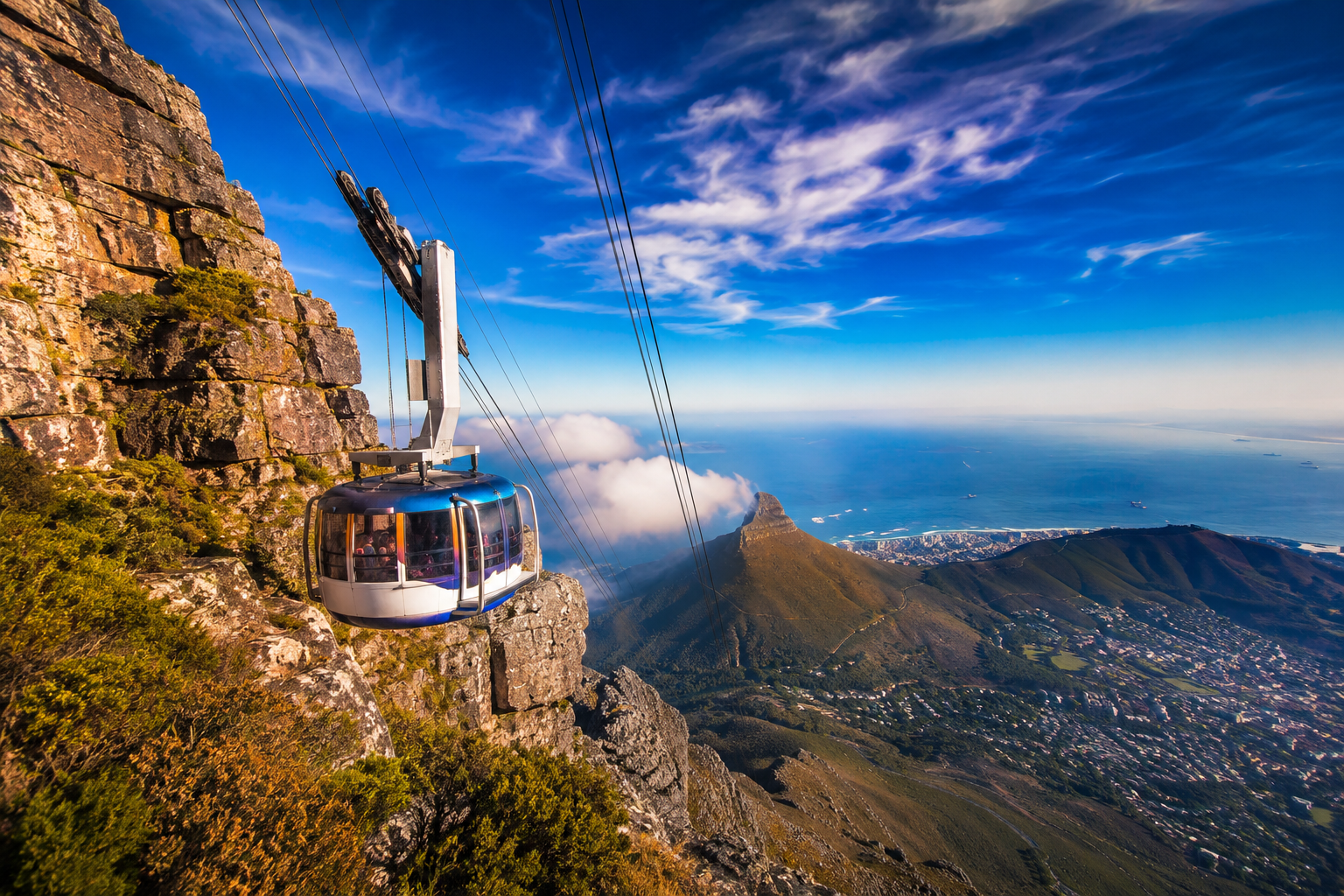
Table Mountain rises 1,086 metres directly above Cape Town’s city bowl, its flat summit a 3-kilometre-wide sandstone platform visible from ships 200 kilometres out to sea and from virtually every part of the Cape Peninsula. The tablecloth cloud — a thick roll of orographic mist that forms when south-easterly winds pass over the summit — is a weather phenomenon unique to the mountain, appearing and disappearing within minutes. The summit itself holds 1,470 plant species, more than in the entire United Kingdom, many of which exist nowhere else on Earth. From the top, Cape Town spreads below between the mountain, Table Bay, and the Atlantic — Robben Island visible in the bay, the Twelve Apostles ridgeline extending south, and Camps Bay’s white beach directly below the western escarpment. The combination of accessible wild summit, botanical rarity, and one of the world’s great city-and-ocean views makes Table Mountain unlike any other urban mountain.
10 practical tips to help you decide
These tips are designed to help you decide whether Table Mountain fits your time, budget, comfort level, and travel style.
-
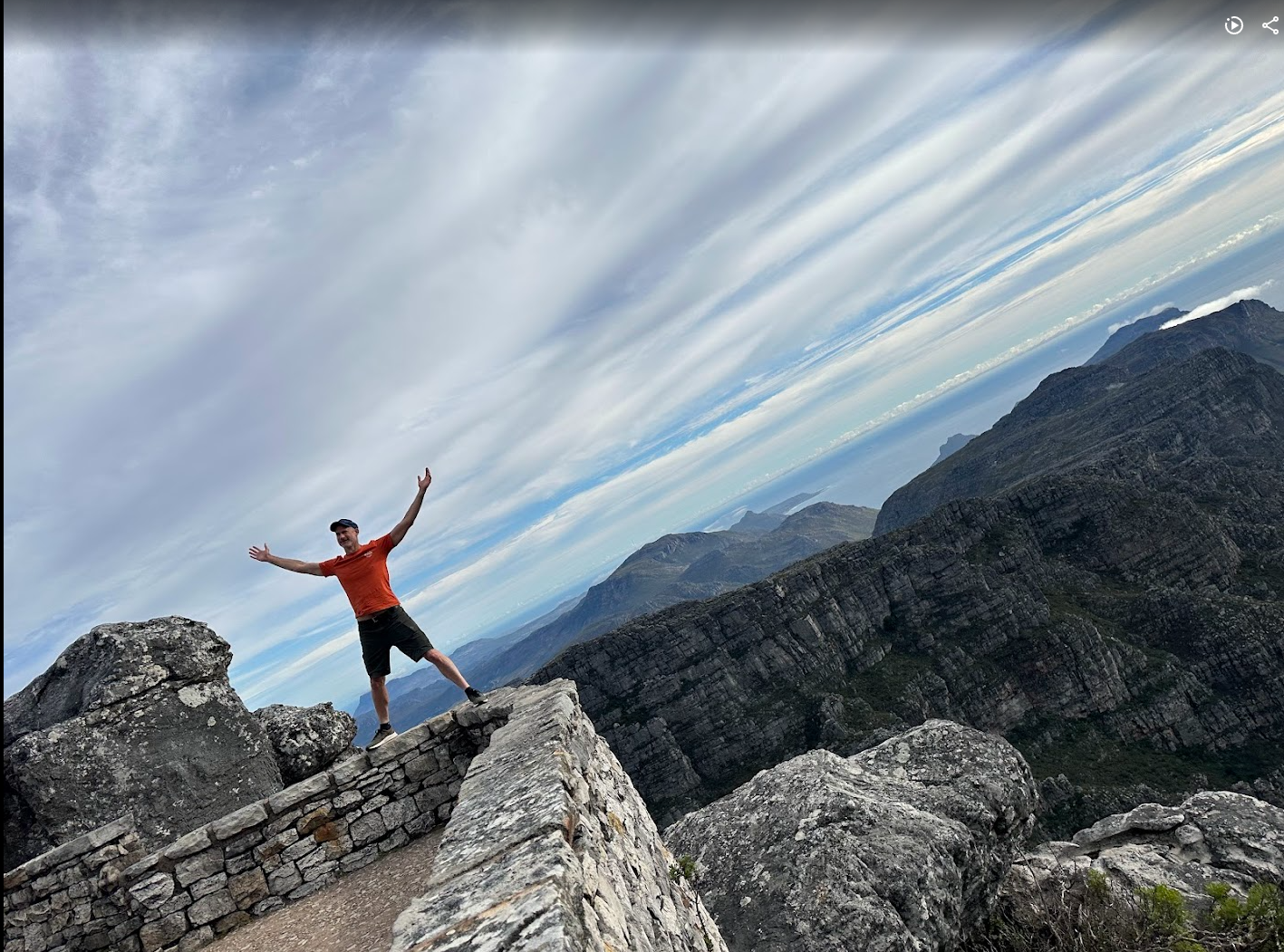
For Cape Town visitors, hikers, photographers, and anyone wanting a big city-and-ocean view in one outing — not those uncomfortable with sudden weather changes or exposed mountain paths. Table Mountain is accessible by cableway without any hiking ability, making it one of the world’s most approachable mountain summits. The hiking routes (Platteklip Gorge, Lion’s Head) are more demanding but still achievable by reasonably fit visitors. The one non-negotiable: weather governs the visit, and the tablecloth cloud can close the summit in 20 minutes.
-
October to April for the most reliable cableway and hiking weather; avoid June to August for consistent access. Cape Town’s summer (November–March) gives the best weather window — warm, mostly sunny days with manageable south-easterly wind. October and April are excellent shoulder months. June to August is the Cape’s winter: cold, rainy, and the cableway can close for days at a time. Check the cableway status at tablemountain.net on the morning you plan to go — they post real-time closure information.
-
Fly into Cape Town International Airport (CPT) — a short transfer to central Cape Town. The airport is 20 km from the city centre; taxis and rideshare run approximately ZAR 250–400 to the CBD (30 minutes). No visa is required for most Western nationals — South Africa gives 90-day visa-free entry to UK, EU, US, Canadian, and Australian passport holders. Check the UK FCDO South Africa travel advice for current entry requirements and the standard warnings about urban crime in certain areas of Cape Town.
-
Half a day for the cableway summit; two to four days for the full mountain and peninsula experience. A cableway trip takes 2–3 hours: 10-minute cable car ride, an hour on the summit, descent. Add Lion’s Head (3 km loop hike, 2 hours) and you have a full half-day. A full day covers Table Mountain plus the Kirstenbosch National Botanical Garden at the mountain’s eastern base. Two to four days opens the Cape Peninsula drive (Boulders penguin colony, Cape Point, Noordhoek Beach) and the Cape Winelands (Franschhoek, Stellenbosch, 45 minutes from the city).
-
Stay in the City Bowl, Green Point, or De Waterkant for the most useful Cape Town base. The City Bowl is the most central area, directly below Table Mountain, with the widest range of accommodation from guesthouses to international hotels. Green Point (near the stadium) is quieter; De Waterkant is lively with boutique guesthouses. The V&A Waterfront has premium hotels right on the harbour. All of these areas are within 15–20 minutes of the cableway lower station by car or taxi.
-
Cape Town is good value by international standards — budget for accommodation, activities, and conservative urban awareness. Mid-range hotels in the City Bowl run ZAR 1,500–3,000 per night (approximately USD 80–165). The Table Mountain Cableway round-trip runs ZAR 480 per adult (approximately USD 26). Meals at restaurants in the Waterfront or De Waterkant run ZAR 200–500 per person. Budget roughly ZAR 3,000–6,000 (USD 165–330) per person per day including accommodation, meals, and activities. Cape Town is considerably cheaper than European or North American equivalents.
-
Read the FCDO advisory carefully — Cape Town is safe in tourist areas but urban crime is a real consideration. The UK FCDO South Africa travel advice advises against travel to specific high-risk areas and notes that crime including muggings and car crime can affect tourist areas. The advice for Table Mountain specifically: do not hike alone on any mountain route (muggings have occurred on isolated paths); use the cableway or hike in groups; do not leave valuables visible in parked cars at the cableway lower station. The tourist areas of Cape Town are broadly safe with standard precautions.
-
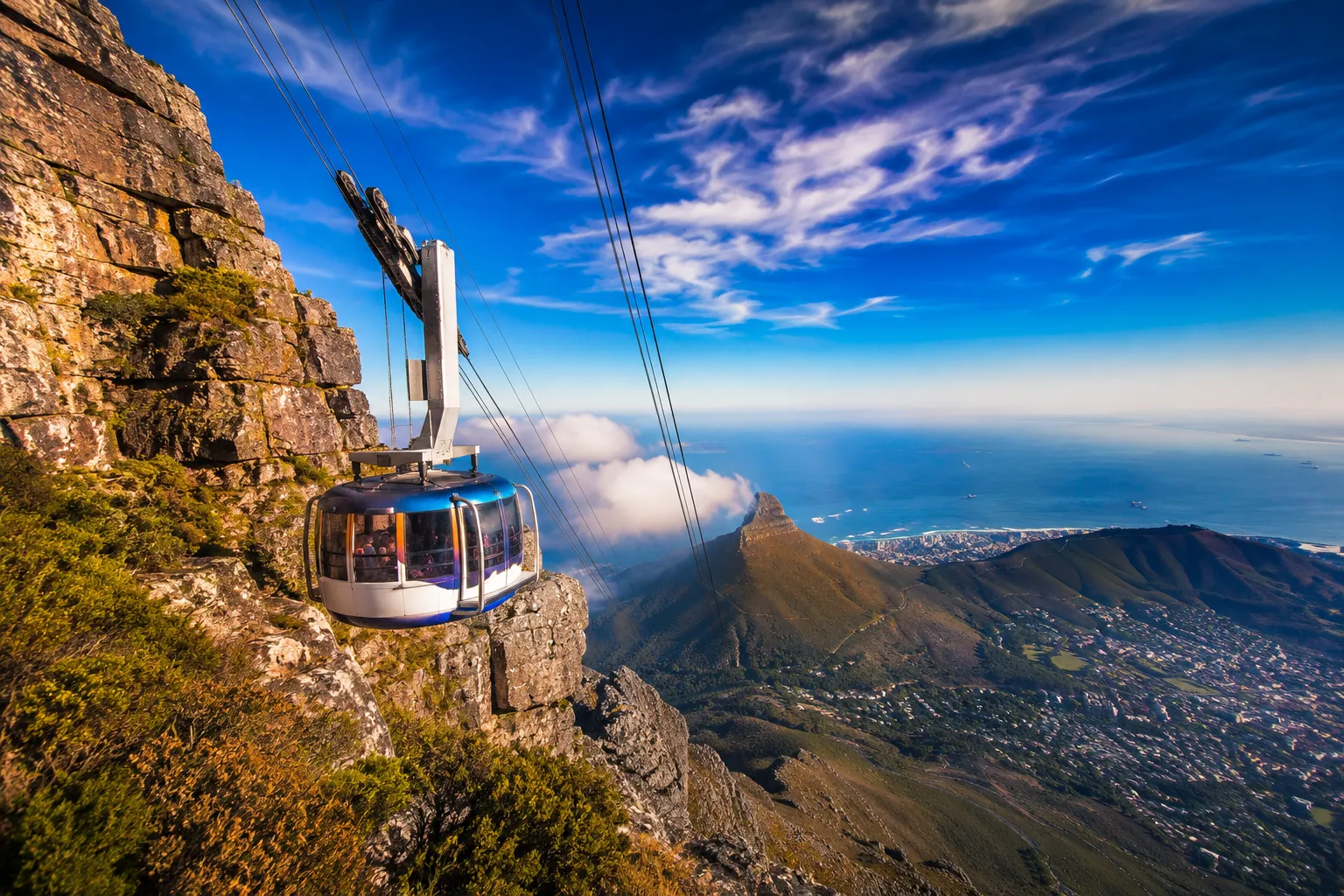
Check the cableway status on the morning you plan to go — do not assume it is running. High winds close the Table Mountain Aerial Cableway at short notice; the closure can last hours or days. Check tablemountain.net or the official app on the morning of your planned visit. If the cableway is closed, Platteklip Gorge (the hiking route) may still be open — it is a steep but well-marked 2-hour ascent. Book cableway tickets online to avoid queues, but be aware that bookings are not guaranteed against weather closures.
-
Hike Lion’s Head for the best view back to Table Mountain — a completely different perspective. Lion’s Head (669 m) is the conical peak beside Signal Hill, connected to the cableway area by a scenic path. The circuit trail (3 km, 2 hours) has chains and ladders at two sections but is manageable for fit visitors with good footwear. The summit gives an unobstructed view of Table Mountain’s full flat top and the Atlantic coastline that no other easily accessible point provides. Go at sunrise for the best light on the mountain face and considerably fewer people.
-
Combine Table Mountain with the Cape Peninsula drive for the full Cape Town experience. The Cape Peninsula road south from Cape Town passes Chapman’s Peak (a clifftop drive above the Atlantic), the Boulders African penguin colony near Simon’s Town, and Cape Point — the dramatic clifftop at the tip of the peninsula where the Atlantic and Indian Ocean weather systems meet. Allow a full day. Drive south along the Atlantic side (Camps Bay, Hout Bay, Chapman’s Peak) and return along the False Bay side (Simon’s Town, Muizenberg). It is one of the world’s great coastal drives.
Gallery
More views of Table Mountain